
A vulnerability and exposure management platform is worth buying in 2026 only if it improves decisions and remediation in your environment—not just reporting. Treat the purchase as a workflow decision: require evidence that your team can identify the right work, assign it, and verify completion. Include implementation effort and ongoing administration in that decision.
- Is Brinqa worth it? Evaluate it for vulnerability and exposure management; buy only after proving workflow value.
- Compare the proposed platform with your current process using the same findings and acceptance criteria.
- Require evidence of usable priorities, accountable ownership, and verified remediation—not just a polished dashboard.
- Keep existing processes when a platform evaluation adds work without improving security decisions.
Why this matters
A security platform should help you make a decision or complete work that matters. A larger inventory, another score, or a cleaner report does not establish that value by itself.
For a 2026 buying decision, separate the platform's category from its demonstrated fit. Start with a broken workflow, then ask whether the proposed purchase fixes it under the conditions your team actually faces.
Is Brinqa worth it in 2026?
Brinqa is worth evaluating for teams seeking vulnerability and exposure management. Buying requires a stronger conclusion: a successful evaluation against your own operational requirements.
| Option | Best for | Potential advantage to test | Limitation to address | Decision |
|---|---|---|---|---|
| Brinqa | Teams evaluating a vulnerability and exposure management platform | Whether the proposed platform improves your chosen security workflow | Fit, implementation work, and results require validation in your environment | Evaluate against written acceptance criteria |
| Improve your current process | Teams whose main obstacle is an unclear policy, owner, or handoff | Whether process changes solve the problem without another platform | Process changes still require accountable owners and evidence of completion | Keep this as the comparison baseline |
| Defer the purchase | Teams unable to define the problem or staff an evaluation | Time to establish requirements and responsibility | Deferral leaves the existing problem unresolved | Wait until you can test a specific outcome |
These are buying paths, not a ranking of product capabilities. Choose the path that addresses the actual constraint. Do not use a platform purchase to avoid deciding who owns remediation or what counts as an accepted exception.
What would make the purchase worthwhile?
Write a plain-language acceptance statement before discussing features. For example: your team needs to turn findings into assigned work, explain why that work takes priority, and confirm whether the underlying exposure remains.
That statement defines what the evaluation must prove. It does not assume that any particular product already meets the requirement.
A useful acceptance statement also names the person who judges the outcome. Security, system owners, and the people doing remediation should agree on the evidence—not discover different expectations after deployment.
What would make the purchase premature?
Wait when you cannot explain what must change after deployment. An undefined goal gives every demonstration an opportunity to look successful without resolving your problem.
Also wait when nobody can maintain the process after the evaluation. A project sponsor can approve a purchase, but ongoing operation needs people responsible for data quality, workflow decisions, and exceptions.
How should you evaluate the platform?
Use a bounded evaluation with written pass conditions. The sequence below is a recommended buying method, not a claim about product features or measured results.
1. Establish the baseline
Document how a finding moves through your current process. Include the original source, the affected asset, the person who reviews it, the remediation owner, and the evidence used to close it.
Record the points where work stops. Distinguish missing information from an unclear decision rule: a platform evaluation should not treat those as the same problem.
2. Choose representative findings
Use findings that resemble real operational work, including inconvenient cases. Include an asset with unclear ownership, a disputed finding, a remediation exception, and an item reported again after supposed closure.
These are test scenarios, not a required sample size. Select enough variety to challenge your requirements without turning the evaluation into a full deployment.
3. Test decisions
Ask the evaluator to explain the proposed priority for each selected finding. Then ask what evidence would change that decision.
Look for a traceable explanation rather than agreement with a familiar score. Your security team should understand the reasoning well enough to defend, challenge, or revise it.
4. Test handoffs
Follow selected findings from review to the people expected to act. Check whether the receiving team understands the affected system, the requested action, and the condition for completion.
Keep unresolved ownership visible. Silently assigning uncertain work to a default queue does not establish accountability.
5. Verify closure
Require a clear distinction between an administrative update and evidence that the exposure was addressed. A closed task and a corrected condition are different claims.
Document how the proposed process handles findings that return, exceptions that expire, and fixes that require validation. Finish the evaluation by checking those cases, not just the straightforward ones.
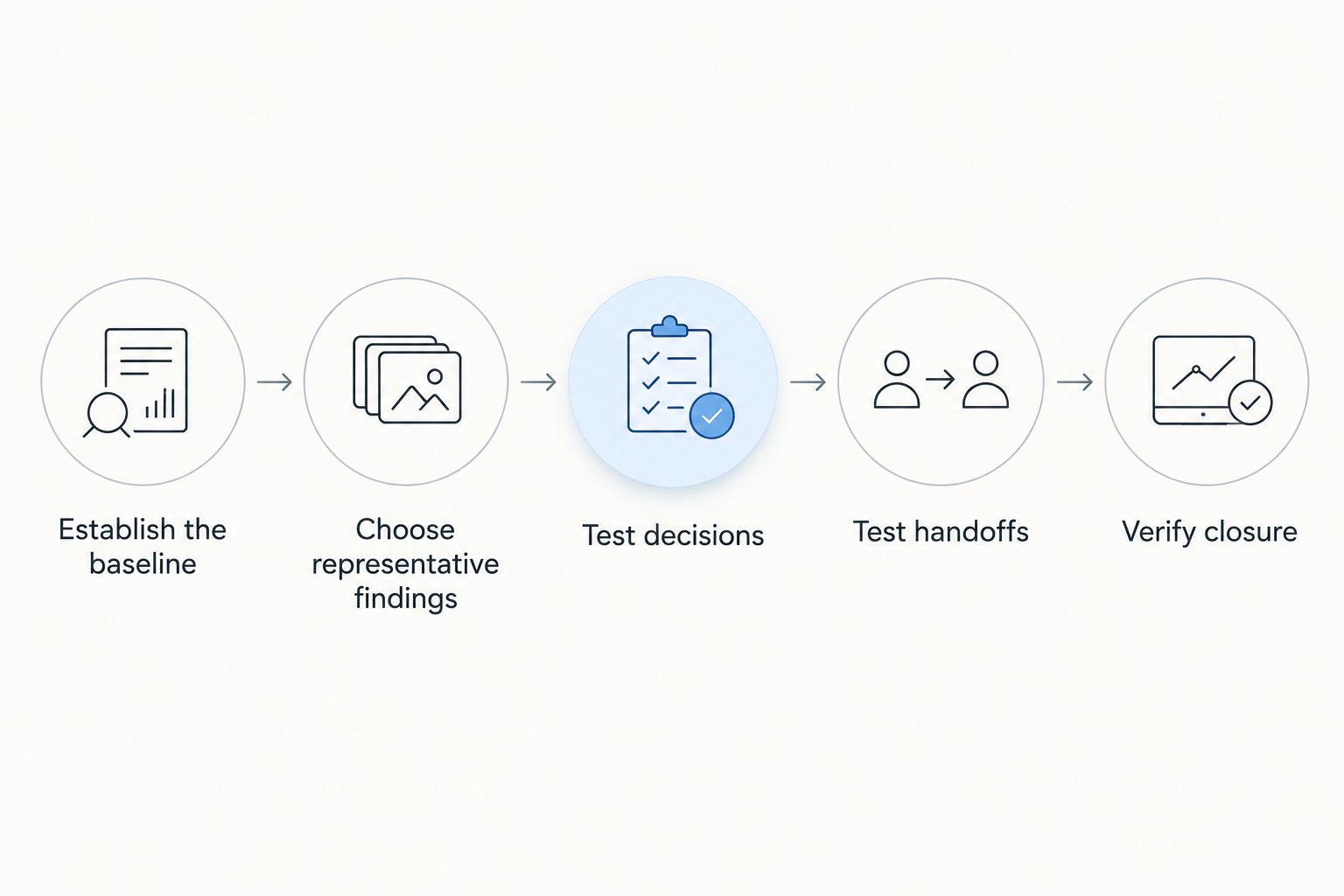
The sequence tests whether the proposed workflow survives a complete operational cycle. In 2026, use the same acceptance criteria for your current process and the proposed platform so the comparison remains fair.
Why platform value varies
The same purchase decision can produce different conclusions across teams. Evaluate these factors as requirements, not as assumed product strengths:
- Problem definition. Decide whether you need better visibility, better prioritization, clearer ownership, or stronger verification. A broad dissatisfaction with security reporting is not a usable requirement.
- Data quality. Identify which source records your team trusts and which need investigation. Ask how missing or conflicting information will remain visible during evaluation.
- Decision rules. State how your organization weighs technical severity, affected systems, and business consequences. Require explanations your reviewers can inspect.
- Remediation responsibility. Identify who accepts work, who can authorize changes, and who resolves disputes. Test the handoff with those people involved.
- Operating capacity. Assign responsibility for maintaining the workflow after launch. Include administration and review effort in the decision rather than treating them as someone else's problem.
- Proof of completion. Define acceptable closure evidence before testing begins. Keep remediation, accepted exceptions, and unresolved findings distinct.
These factors describe the evaluation you control. They do not establish a vendor's implementation requirements or guarantee a particular outcome.
What are the advantages and drawbacks to weigh?
The strongest reason to evaluate a platform is a specific management problem that your current approach does not resolve. The strongest reason to wait is an inability to show how the proposed approach improves that problem.
Potential advantage: a more usable decision process
Test whether the proposed workflow helps reviewers explain what needs attention and why. A useful result is a decision that the responsible team can act on without reconstructing the entire investigation.
The drawback is evaluation effort. Your team must provide representative cases, challenge explanations, and review the outcome; a demonstration alone cannot substitute for that work.
Potential advantage: clearer accountability
Test whether the workflow gives responsible teams enough context to accept and complete the work. Include disagreement and reassignment rather than testing only findings with obvious owners.
The drawback is that software does not settle organizational authority. If security and engineering disagree about responsibility, require a decision process alongside the technical evaluation.
Potential advantage: stronger evidence of progress
Test whether your proposed process distinguishes completed work from unresolved exposure and accepted exceptions. Reporting should preserve those distinctions instead of combining them into a reassuring total.
The drawback is maintenance. Evidence loses usefulness when teams stop updating sources or applying closure rules consistently; include that work in the operating plan.
Treat every potential advantage as a testable requirement, not a promised result. This keeps the business case tied to evidence rather than the vocabulary used in a sales presentation.
Is Brinqa worth it for a small security team?
Team size alone does not determine whether a vulnerability and exposure management platform is worthwhile. Start with the work the team must manage and the capacity available to operate a new process.
For a lean team, a useful evaluation must include administration—not just analyst-facing tasks. Ask who will maintain the workflow when the primary operator is unavailable, and reject an operating plan that depends on invisible spare capacity.
Should you improve your current workflow before buying?
Yes, when unclear rules or responsibilities prevent a fair evaluation. Establish the minimum process needed to judge whether a platform improves it; you do not need to perfect every existing step first.
For your 2026 review, preserve the current workflow as a baseline. Otherwise, improvements from new policies, better ownership, and the proposed software become difficult to distinguish.
What should the final buying decision include?
The buying decision should connect each requirement to observed evidence, an accountable owner, and an unresolved issue where one remains. Keep the decision record short enough for the people approving the purchase to inspect.
Use explicit outcomes rather than a single overall impression:
- Proceed: The evaluation demonstrates the required workflow, and named owners accept the operating responsibilities.
- Revise and retest: A requirement remains unresolved, but the team has defined the change and the evidence needed to reassess it.
- Stop: The proposed approach does not resolve the chosen problem, or your organization cannot support the operating process.
Do not turn an unresolved requirement into an assumed future benefit. If a critical outcome remains unproven, retain it as a condition of the decision.
In 2026, the useful business case is not that exposure management matters in general. It is that the proposed purchase addresses a defined problem better than the approach you would otherwise use.
FAQ
Is Brinqa worth it in 2026?
Brinqa is worth evaluating if you are seeking a vulnerability and exposure management platform. Buy only after an evaluation demonstrates the workflow outcomes you require and your team accepts the ongoing operating responsibilities.
What's the best way to evaluate a vulnerability management platform?
Evaluate a vulnerability management platform against written acceptance criteria using representative findings from your environment. Follow the work through prioritization, ownership, remediation, and closure rather than judging only the demonstration.
Is a vulnerability management platform worth it for a small team?
A vulnerability management platform is worthwhile for a small team only when the operational benefit justifies the work required to run it. Include administration, exception handling, and coverage during staff absence in the evaluation.
Should I replace my current security tools when buying a platform?
Do not decide to replace existing tools until you have mapped the capabilities your organization still needs. Evaluate replacement claims separately from the case for improving management workflows.
How do I know whether a platform improves vulnerability prioritization?
A platform improves your prioritization process only when its output helps your team make better-supported decisions against defined requirements. Test whether reviewers can explain the priority and identify evidence that would change it.
Does closing a remediation ticket prove the vulnerability is fixed?
Closing a remediation ticket does not by itself prove that the underlying vulnerability is fixed. Define the evidence needed to verify remediation and distinguish that evidence from an administrative status change.
What should I ask before approving the purchase?
Ask which problem the purchase resolves, what the evaluation demonstrated, who will operate the process, and which requirements remain unresolved. Require explicit acceptance of those responsibilities before proceeding.
One last thing
Ask the remediation team to reject a finding during the evaluation. A disputed case tests the explanation, ownership rules, and exception process together; an uncomplicated finding does not.
For Brinqa—or any vulnerability and exposure management purchase—your final question should be operational: can the people responsible explain the decision and complete the work? Make that your 2026 acceptance test.