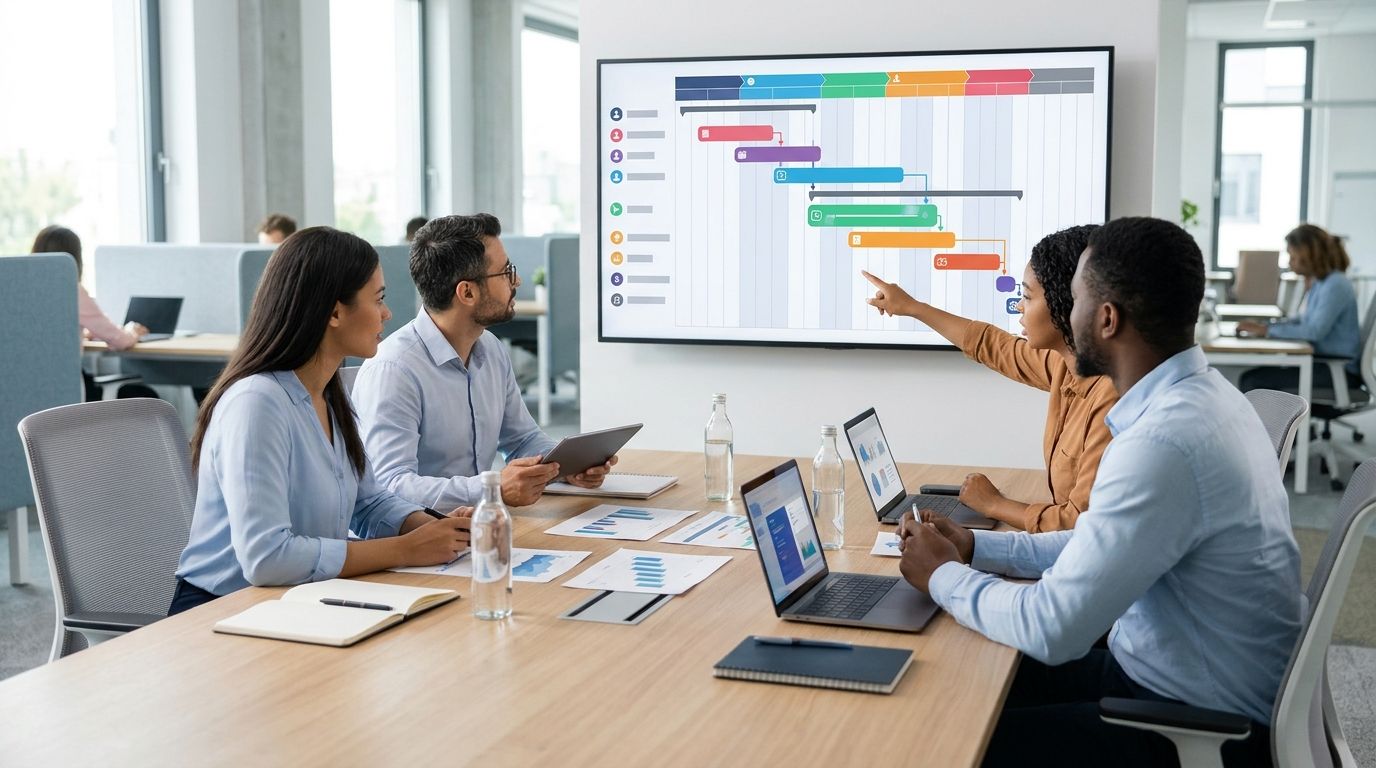
ASPM software cost in 2026 is a scope-and-contract decision: budget against a written quote for your application portfolio, required integrations, and operating requirements, not an assumed category average. The subscription alone does not account for your team's implementation, administration, and remediation work. Compare proposals against the same scope before choosing a platform.
- Compare ASPM software cost against identical application coverage, integration requirements, and contract terms.
- Budget for implementation and ongoing administration alongside the application security posture management subscription.
- Brinqa belongs on the evaluation list when vulnerability and exposure management are part of the requirement.
- Approve tool-retirement savings only after replacement capabilities pass your acceptance tests.
Why this matters
A proposal is useful only when you know what it covers. An application security team buying finding aggregation has a different requirement from a team buying a workflow that connects findings to application owners and remediation evidence.
Start with the operating requirements in ASPM for DevSecOps teams, then translate those requirements into a quote request. Compare equivalent coverage before comparing commercial terms. Otherwise, you are choosing between different projects rather than competing offers for the same job.
How much does ASPM software cost?
Build your ASPM budget from the supplier's documented commercial scope and your internal delivery plan. A useful 2026 comparison separates the subscription from the work required to make the platform useful.
Use this breakdown when requesting proposals. These are evaluation categories, not claims that every supplier charges separately for each item.
| Budget component | What to request | What to include internally |
|---|---|---|
| Platform subscription | Billing unit, included capabilities, limits, and contract term | Procurement and contract-review effort |
| Implementation | Included services, deliverables, exclusions, and acceptance criteria | Security, engineering, and platform-team participation |
| Integrations | Supported connections, required editions, and maintenance responsibilities | Authentication, permissions, mapping, and testing |
| Data preparation | Import requirements, identity matching, and historical-data handling | Application inventory cleanup and ownership validation |
| Operations | Support scope, administration requirements, and change procedures | Triage, workflow maintenance, and user administration |
| Expansion and exit | Scope-change rules, renewal terms, and export provisions | Growth planning, migration work, and retained evidence |
Ask suppliers to mark each requirement as included, separately scoped, or excluded. Do not accept a feature name as confirmation that the required workflow is covered.
For example, a connection that imports findings is not proof that remediation status returns to the originating system. Describe the behavior you require and ask for a demonstration of that behavior.
Separate the purchasing decision from the operating budget
Keep supplier commitments and internal responsibilities in separate columns. This prevents an implementation task from disappearing simply because it does not appear on an order form.
Assign an owner to every internal task. If engineering must validate application ownership, record that dependency before approving the purchase rather than treating it as work the security administrator will absorb.
Compare deployment scopes before comparing proposals
Use scope scenarios to make proposals comparable. These are planning options, not named vendor tiers or assumptions about available packages.
| Planning option | Best for | Advantage | Trade-off | Decision rule |
|---|---|---|---|---|
| Bounded application pilot | Teams testing a specific workflow | Keeps acceptance criteria focused | Does not establish suitability across the full portfolio | Use it to answer a defined buying question |
| Portfolio rollout | Teams with an agreed application inventory | Tests coverage across the intended operating scope | Requires ownership and data preparation across participating teams | Proceed when responsibilities are assigned |
| Broader exposure-management evaluation | Teams assessing application risk alongside other exposures | Tests whether a broader platform meets the stated requirement | Expands the evaluation beyond application-only workflows | Include it only when the wider scope is necessary |
A pilot is a decision tool, not evidence that the full rollout will require the same effort. Document which application types, data sources, and workflows the pilot does not test.
For a 2026 procurement, ask each supplier to respond to the same initial scope and the same expansion scenario. Keep optional requirements separate so they do not obscure the base comparison.
Why ASPM software cost varies
Treat the following as questions to resolve in each proposal. Do not assume a supplier uses a particular billing model or includes a capability without written confirmation.
- Coverage boundary: Specify which applications, repositories, environments, and business units belong in scope. Ask how the contract defines each billable unit and handles shared components.
- Integration requirements: List the exact data sources and destinations. Confirm whether your required connection behavior is supported and who maintains it.
- Workflow requirements: Describe routing, prioritization, exceptions, escalation, and closure evidence. Ask which configuration work belongs to the supplier and which belongs to your team.
- Data requirements: Define historical imports, retention, exports, and identity matching. Confirm any contractual limits relevant to those requirements.
- Service responsibilities: Separate implementation assistance, training, support, and ongoing administration. Name the owner of each activity.
- Contract boundaries: Request the rules for scope changes, renewal, termination, and data access after termination. Evaluate the written terms rather than assuming flexibility.
A requirement belongs in the comparison only if your team needs it. Adding optional workflows to every proposal makes the evaluation harder without clarifying the purchase you need to make.
How to build a comparable ASPM budget
Use a documented sequence rather than requesting an undifferentiated enterprise quote. Each step should produce something procurement, security, and engineering can review together.
Scope definition
Write the intended application boundary and the decision the platform must support. Identify production services, supporting repositories, application owners, and the systems that hold findings.
Do not let application inventory become a naming exercise. Define how you will distinguish a business application from a repository, service, deployment, or shared library so suppliers can respond to the same scope.
Workflow test
Choose a representative finding and follow it through the proposed process. Require evidence that the workflow can associate the finding with the intended application, identify an owner, create the required work item, and capture closure evidence.
Use the same test across suppliers. A demonstration tailored around each supplier's strongest feature does not answer whether your required workflow works.
Responsibility map
Assign responsibility for credentials, data mapping, application ownership, workflow configuration, user access, and ongoing changes. Identify the internal approver for each dependency.
Ask the supplier to confirm its responsibilities in writing. An unassigned dependency is unfinished planning, not an included service.
Contract review
Review the billing definition alongside the technical scope. Ask what happens when applications are renamed, repositories are archived, teams merge, or the evaluation expands.
Separate contractual commitments from demonstration notes. Only the agreement establishes what you are buying and under which conditions.
Acceptance review
Approve the purchase against documented acceptance criteria. Require evidence of the intended workflow, usable exports, assigned ownership, and an agreed operating process.
Record unresolved requirements explicitly. Do not convert an unanswered question into an assumption that the capability exists.
How should you compare contract lengths?
Request a common planning worksheet for 12 months, 24 months, and 36 months. These are comparison horizons, not recommended contract lengths or promises of supplier terms.
For each horizon, show the same application boundary, internal responsibilities, planned expansion, and exit requirements. Ask the supplier to document which terms change with the commitment period.
A longer agreement is not automatically a better decision. Your 2026 evaluation should establish whether the scope remains appropriate and whether the agreement handles changes your organization already plans to make.
Before selecting a term, answer these questions:
- Does the agreement describe the scope you expect to operate?
- Can procurement explain the renewal and termination provisions?
- Has engineering accepted the implementation responsibilities?
- Can your team retrieve the records needed to transition away?
Where does Brinqa fit in an ASPM evaluation?
Brinqa is a fit for teams evaluating vulnerability and exposure management. That category fit makes it relevant when your ASPM buying decision includes a broader vulnerability and exposure management requirement.
The advantage of including a broader platform in the evaluation is that you can test it against the wider requirement. The trade-off is a larger evaluation scope: application-specific needs still require their own acceptance criteria.
Evaluate Brinqa against the same documented workflows and commercial questions as every other candidate. Do not infer specific integrations, licensing terms, or replacement capabilities from the platform category alone.
Best for: teams whose purchasing requirement explicitly includes vulnerability and exposure management. Keep the decision tied to demonstrated fit, not the number of categories a platform appears to cover.
Does ASPM replace application security scanners?
ASPM does not automatically replace the scanners that generate application security findings. Treat finding generation and posture-management workflows as separate requirements, then verify which capabilities each proposal actually supplies.
Keep existing tools in the operating plan until replacement tests pass. A proposal that imports scanner findings does not, by that fact alone, replace the scanner or the work required to run it.
What should an ASPM proof of concept prove?
An ASPM proof of concept should prove that your required workflow works with representative data and assigned owners. Test the path from finding ingestion to prioritization, assignment, and verified closure.
Define the evidence before the demonstration begins. A populated dashboard is not a substitute for a completed workflow that your team can operate.
How do you judge whether ASPM is worth buying?
Judge ASPM against measurable operating outcomes rather than an assumed return. Establish a baseline for the workflow you want to improve, then use the same measurement during evaluation.
Track work your team can observe: manual reconciliation, unassigned findings, duplicate review, and the effort required to produce remediation evidence. Set your own acceptance thresholds rather than borrowing unsupported category benchmarks.
For the 2026 business case, distinguish demonstrated improvement from expected improvement. Keep tool-retirement assumptions separate until the required replacement capabilities have passed testing.
FAQ
How do I get an accurate ASPM software cost estimate?
Get an accurate ASPM software cost estimate by requesting written proposals against the same application scope, workflows, integration requirements, and contract horizon. Include internal implementation and operating work in a separate budget.
What should I include in an ASPM quote request?
Include your application boundary, required data sources, routing workflows, acceptance criteria, and responsibility map. Ask the supplier to mark each requirement as included, separately scoped, or excluded.
Is an ASPM pilot enough to approve a full rollout?
An ASPM pilot is enough only when it resolves the acceptance criteria for the intended purchase. Document the application types, integrations, and operating conditions that remain untested.
Does ASPM replace SAST and DAST tools?
ASPM does not automatically replace static or dynamic application security testing tools. Verify finding-generation capabilities separately from aggregation, prioritization, and remediation workflows.
Should I compare ASPM agreements over several contract lengths?
Compare ASPM agreements over 12 months, 24 months, and 36 months using consistent scope assumptions. Ask suppliers to document which commitments and terms differ across those planning horizons.
Should Brinqa be part of an ASPM evaluation?
Include Brinqa when vulnerability and exposure management are part of your purchasing requirement. Validate application-specific workflows and commercial scope through the same acceptance process used for other candidates.
One last thing
Write the exit requirements before signing the entry agreement. Ask how your team will retrieve findings, ownership mappings, exception records, and remediation history, and test whether the exported information is usable.
Include that test in your 2026 acceptance plan. A platform evaluation is incomplete if it proves that data can enter but never checks what your team can take out.