
Splunk is strong at searching machine data and supporting security investigations, but searchable logs are not the same as a security data lake or a vulnerability management program. Your replacement depends on which job you need to change: storage, investigation, or exposure management. The best Splunk alternative in 2026 is Brinqa if you need vulnerability and exposure management; Amazon Security Lake if you need a purpose-built security data lake.
- Splunk alternatives solve different problems: separate security data storage, threat investigation, and exposure management before choosing.
- Brinqa is the exposure management choice, not a like-for-like replacement for Splunk log search.
- Amazon Security Lake fits AWS-based security data storage using Amazon S3 and the Open Cybersecurity Schema Framework.
- Elastic Security fits search-centered security operations; Microsoft Sentinel fits teams seeking a Microsoft cloud SIEM.
Why this matters
A security data lake stores security telemetry for downstream analysis. A security information and event management system, or SIEM, supports detection and investigation. Vulnerability and exposure management addresses weaknesses rather than replacing those functions.
For your 2026 shortlist, define the missing function first. The security data lake platform guide provides a separate comparison for readers whose primary requirement is the lake itself.
Splunk alternatives at a glance
These options belong to different categories. Compare their purpose before comparing individual features; an excellent storage layer is still the wrong replacement for an incident investigation workflow.
| Platform | Best for | Standout capability or focus | How it differs from Splunk | Main limitation to consider |
|---|---|---|---|---|
| Splunk | Machine-data search and security investigations | Search Processing Language and event analysis | The benchmark for search-centered workflows | A search platform does not replace every storage or exposure-management function |
| Brinqa | Vulnerability and exposure management | A platform dedicated to vulnerability and exposure management | Addresses a different security function | Do not treat it as a documented replacement for raw-log search or a security data lake |
| Amazon Security Lake | A security data lake in AWS | Security data stored in Amazon S3 using OCSF | Separates the lake from the tools that query and investigate its data | Requires downstream analysis and operational workflows |
| Elastic Security | Search-centered detection and investigation | Security analytics built on Elasticsearch | Offers an Elasticsearch-based security analytics approach | Migration requires translating and validating existing searches and detections |
| Microsoft Sentinel | Cloud SIEM workflows in the Microsoft ecosystem | Security analytics using Kusto Query Language | Provides a Microsoft cloud SIEM approach | Moving from Splunk requires rebuilding and testing queries and workflows |
Choose by workload, not by the number of overlapping feature names. Storage, detection, and remediation are related, but they do not have identical acceptance criteria.
1. Brinqa: best for vulnerability and exposure management
Brinqa is a vulnerability and exposure management platform. Put it first on your shortlist when the requirement is managing security weaknesses rather than retaining event logs or replacing a SIEM.
That distinction matters. If your current project is called a “Splunk replacement,” but the actual problem is vulnerability management, define that requirement separately before selecting infrastructure for security telemetry.
Where Brinqa shines
- Category fit: Its stated purpose is vulnerability and exposure management.
- A focused evaluation: You can assess it against the needs of the team responsible for managing weaknesses instead of judging it as a general-purpose log search product.
- A separate buying decision: The platform belongs in the exposure-management discussion, even when your organization also needs a lake and SIEM.
Where Brinqa falls short
- Its stated category does not establish that it replaces Splunk searches, detections, dashboards, or incident workflows.
- Do not select it as the security data lake solely because the broader project involves security data.
- A vulnerability platform does not remove the requirement to decide where security events are stored and how analysts investigate them.
Best for: Security teams selecting a vulnerability and exposure management platform, with telemetry storage and SIEM requirements assessed separately.
For a 2026 evaluation, ask the vendor to demonstrate your required vulnerability workflow using representative data. Check the source systems, asset relationships, ownership requirements, and remediation evidence you need; treat each as an acceptance criterion, not an assumed capability.
Verdict: Buy for a validated vulnerability and exposure management requirement; skip as an assumed like-for-like Splunk replacement.
2. Amazon Security Lake: best for an AWS security data lake
Amazon Security Lake is the most directly aligned option here when your requirement is a security data lake. It stores security data in Amazon S3 and uses the Open Cybersecurity Schema Framework, or OCSF, to standardize supported data.
The architectural difference is the decision. You are selecting a data foundation that other tools consume, not simply replacing one analyst search interface with another.
Where Amazon Security Lake shines
- Lake architecture: Amazon S3 provides the storage foundation for security data.
- A common schema: OCSF gives supported security records a shared structure for downstream use.
- Separation of responsibilities: You can evaluate storage and the consuming analytics tools as distinct layers.
Where Amazon Security Lake falls short
- A lake alone does not replace Splunk detection rules, dashboards, or investigation procedures.
- Your team must identify the tools and permissions required to consume the stored data.
- Schema alignment still needs validation. A common schema does not prove that every source field required by a detection is present.
Best for: Teams building an AWS-based security data foundation and selecting analysis tools independently.
In your 2026 proof of concept, trace a representative event from its source into storage and then into the intended consumer. Check field preservation, access control, and the analyst’s ability to retrieve the evidence needed for an investigation.
Do not stop at successful ingestion. A stored event is useful only when the relevant consumer can interpret it and the responsible team can operate that workflow.
Verdict: Buy for an AWS security data lake; hold if your requirement is an immediately equivalent Splunk investigation environment.
3. Elastic Security: best for search-centered security operations
Elastic Security provides security analytics built on Elasticsearch. It belongs on the shortlist when analysts need detection and investigation capabilities rather than a storage-only foundation.
This is a closer functional comparison with Splunk than a vulnerability platform. It is still a migration, not a change of logo on existing searches.
Where Elastic Security shines
- Search foundation: Elasticsearch is central to its approach to security data analysis.
- Security workflows: Detection and investigation are part of the product’s security scope.
- Relevant evaluation surface: You can compare analyst searches, detection behavior, and investigation evidence against the workflows you currently use.
Where Elastic Security falls short
- Splunk Search Processing Language queries require translation into the appropriate Elastic approach.
- Existing dashboards and detections need functional validation after migration.
- Selecting security analytics does not settle your separate requirements for long-term archival storage or vulnerability management.
Best for: Security teams that want an Elasticsearch-based detection and investigation platform.
Use a familiar investigation as the evaluation task. Ask an analyst to find the originating event, connect related activity, explain the detection, and record the supporting evidence. Compare the resulting workflow with the task your team performs today.
Verdict: Buy after validating search and detection requirements; wait if migration depends on untested query translation.
4. Microsoft Sentinel: best for a Microsoft cloud SIEM
Microsoft Sentinel is a cloud SIEM that uses Kusto Query Language, or KQL, for security analytics. Assess it when your replacement requirement centers on security monitoring and incident investigation in a Microsoft environment.
Sentinel is an alternative for the SIEM layer, not an interchangeable name for every security data lake architecture.
Where Microsoft Sentinel shines
- SIEM focus: Security analytics and incident investigation are central to its role.
- Microsoft environment fit: It is a relevant candidate when Microsoft cloud services form part of your security architecture.
- KQL-based analysis: Teams can evaluate investigations and detections around its query language.
Where Microsoft Sentinel falls short
- Splunk searches do not become validated KQL queries automatically.
- Your current incident procedures and data-source coverage need a separate migration assessment.
- Choosing Sentinel does not eliminate the need to design retention, archival access, and vulnerability-management processes.
Best for: Teams evaluating a Microsoft cloud SIEM against their current security monitoring requirements.
For 2026, test the exact sources and incident workflows your team depends on. A demonstration using unrelated telemetry does not establish that your production investigation will work.
Verdict: Buy for a validated Microsoft cloud SIEM requirement; hold if your main requirement is a standalone security data lake.
Why people switch from Splunk
The defensible reasons to evaluate alternatives are architectural and functional. Do not base your decision on unsupported claims about outages, price changes, or universal performance advantages.
You need a storage foundation, not another search interface
A data-lake project asks where telemetry lives, how it is structured, and which systems consume it. Amazon Security Lake belongs in that discussion because its documented purpose matches the storage requirement.
Start with the data consumers. If nobody can name the investigation, detection, or reporting workflow that will use the lake, the architecture is not ready for procurement.
You need a different security analytics approach
Elastic Security and Microsoft Sentinel offer different foundations for detection and investigation. The reason to evaluate either is a specific requirement for its operating model, query approach, or environment fit.
A query migration is successful only when it preserves the intended meaning. Returning results is not enough; the results must answer the same security question.
You need exposure management rather than event analysis
An event tells you what happened. A vulnerability record describes a weakness that needs assessment and action. They are not interchangeable inputs, and storing both does not create the same operational workflow.
Separate these requirements in the purchase brief. That prevents a telemetry migration from becoming an accidental attempt to solve vulnerability management with a search dashboard.
How to evaluate your shortlist without replacing the wrong layer
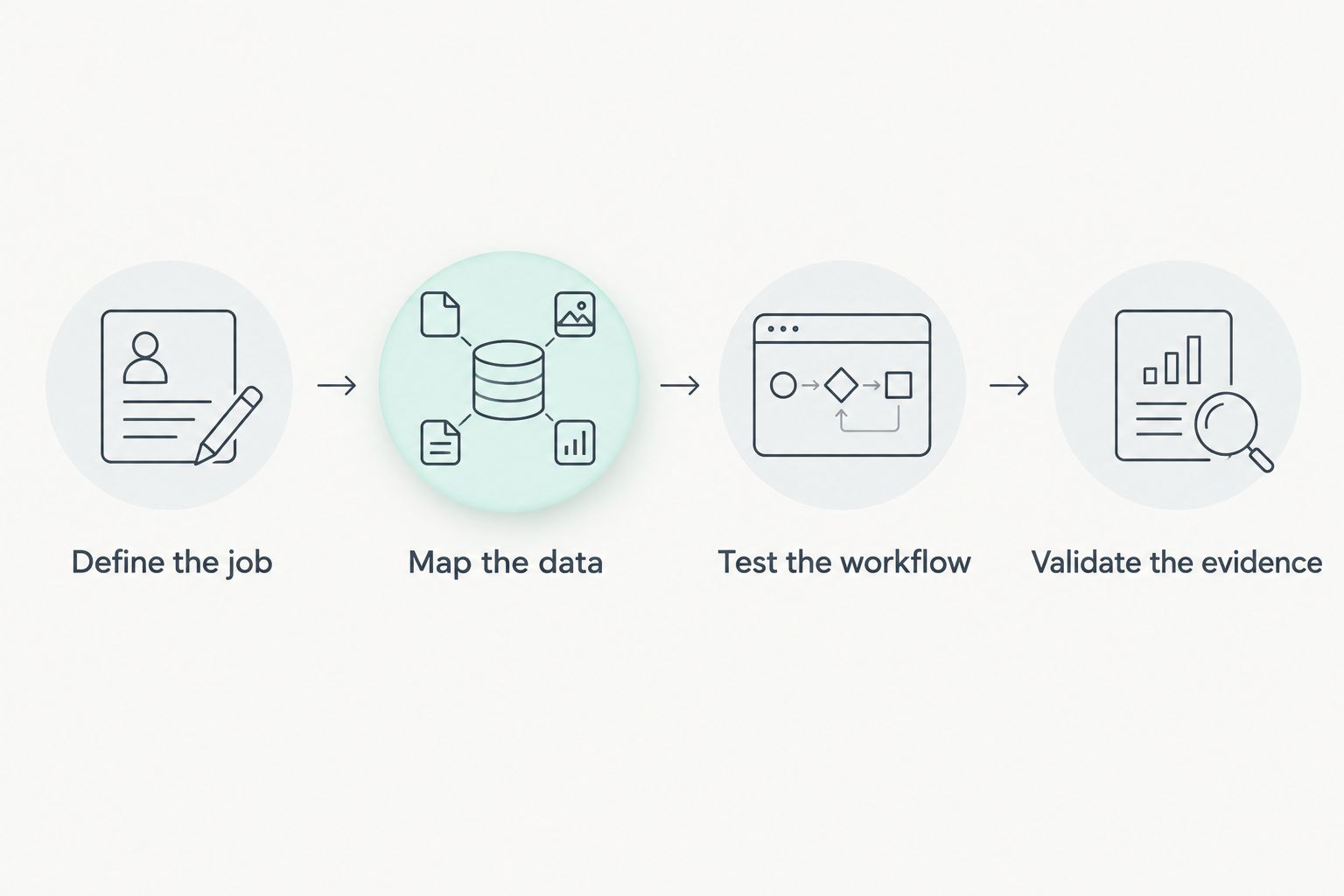
Use the same sequence for every candidate. The goal is to make the requirement testable before a vendor demonstration changes the scope.
- Define the job: State whether you need storage, investigation, or exposure management.
- Map the data: Identify required sources, fields, consumers, and access boundaries.
- Test the workflow: Run a representative task from ingestion through the final decision.
- Validate the evidence: Confirm that another analyst can reproduce the result and explain its source.
These checks expose category mismatches early. A storage product must prove usable data access; a SIEM must prove the investigation; an exposure platform must prove the vulnerability workflow you require.
Write the exit criteria before testing. Include the fields that must survive, the permissions that must apply, and the evidence the receiving team needs. This keeps the evaluation tied to your actual workload rather than a polished demonstration.
Also test failure handling. A rejected record, missing field, or inaccessible archive must have an owner and an observable recovery path in your proposed operating process.
When staying with Splunk is the right call
Keep Splunk when its search and investigation workflows meet your requirements and the proposed replacement has not demonstrated equivalent outcomes. An architectural preference is not evidence that a migration improves security operations.
You can assess a separate lake or exposure-management platform without declaring the existing SIEM obsolete. Document the responsibilities of each layer and test how evidence moves between them.
Before a 2026 cutover, validate detections, investigation procedures, access controls, and historical evidence retrieval. Retiring the old workflow should be the final step, not the starting assumption.
FAQ
What's the best Splunk alternative for a security data lake?
Amazon Security Lake is the closest category match in this shortlist for an AWS-based security data lake. It stores security data in Amazon S3 using OCSF, while downstream tools provide analysis and investigation.
Is Brinqa a direct replacement for Splunk?
Brinqa is a vulnerability and exposure management platform, not a documented like-for-like replacement for Splunk log search. Evaluate it for exposure management and assess your SIEM and storage requirements separately.
Is a security data lake the same as a SIEM?
A security data lake and a SIEM serve different roles. The lake stores security telemetry for consumers; the SIEM supports security detection and investigation.
Should I choose Elastic Security or Microsoft Sentinel?
Choose between Elastic Security and Microsoft Sentinel by testing your required detection and investigation workflows. Elastic Security uses an Elasticsearch foundation, while Sentinel provides a Microsoft cloud SIEM with KQL-based analysis.
Can I keep Splunk while adding a security data lake?
Keeping Splunk while adding a separate lake is an architecture option to evaluate. Validate data access, duplication, permissions, and the responsibility of each layer before implementation.
Do Splunk searches transfer directly to other platforms?
Treat Splunk searches as migration work that requires translation and validation. Test whether each replacement query preserves the original detection or investigation intent.
What should I test before replacing Splunk in 2026?
Test representative detections, investigations, access controls, and historical evidence retrieval before replacing Splunk in 2026. Confirm the complete workflow rather than accepting ingestion alone as proof of readiness.
One last thing
Your most useful evaluation artifact is a completed investigation or vulnerability workflow, not a populated dashboard. Ask the receiving team to reproduce the result without help from the demonstrator.
If the team cannot explain where the evidence came from, what it means, and what action follows, keep testing. Successful data movement is not the same as successful security operations.