
Choose Brinqa if your main problem is vulnerability and exposure management; choose Safe Security if your main problem is cyber risk quantification for business decisions. This 2026 comparison separates operational remediation needs from financial risk analysis, then gives you a practical way to evaluate both without confusing a product category with a proven feature.
- Brinqa vs Safe Security is primarily an exposure management versus cyber risk quantification decision.
- Brinqa is best for security teams buying a vulnerability and exposure management platform.
- Safe Security is best for buyers focused on cyber risk quantification and business risk decisions.
- Evaluate remediation evidence and financial assumptions separately; neither replaces the other.
Why this matters
A vulnerability backlog and a financial risk question require different outputs. Your operations team needs to know what to fix, who owns it, and how to verify the fix. Your leadership team needs to understand which loss scenarios matter and which security investments address them.
Those questions overlap, but they are not interchangeable. A prioritized finding does not automatically explain financial exposure. A loss estimate does not automatically give an engineer an actionable remediation task.
Choose the platform category that addresses your immediate decision. Then require evidence for the capabilities that connect it to the rest of your security program. For a 2026 purchase, that means evaluating your actual data and workflows rather than treating a polished demonstration as proof.
At a glance
The table compares buying fit, not independently measured product performance. Use its rows as the agenda for vendor demonstrations and contract review.
| Dimension | Brinqa | Safe Security |
|---|---|---|
| Best for | Buyers seeking vulnerability and exposure management | Buyers seeking cyber risk quantification |
| Operational prioritization | More direct category fit for deciding which exposures to address | Evaluate how risk analysis connects to specific remediation decisions |
| Financial risk analysis | Evaluate financial analysis separately from exposure management | More direct category fit for quantified business risk decisions |
| Reporting audience | Start with security operations and exposure-management requirements | Start with business risk and investment-decision requirements |
| Data validation | Require traceable source records and business context | Require traceable inputs and explicit modeling assumptions |
| Implementation | Evaluate against your existing security workflow | Evaluate against your risk-analysis workflow |
| Pricing model | Compare the proposed licensing basis and contracted scope | Compare the proposed licensing basis and contracted scope |
| Standout category strength | Vulnerability and exposure management | Cyber risk quantification |
Exposure management wins for an operational backlog
A vulnerability and exposure management platform is the more direct starting point when your deliverable is a remediation queue. That is the category fit to prioritize when your security team spends its time reconciling findings, identifying accountable owners, and deciding which work reaches engineering first.
The advantage is alignment with the operational question. The limitation is equally important: category alignment does not establish the quality of a particular connector, prioritization rule, or remediation workflow. Require demonstrations of those functions before treating them as purchase reasons.
Bring a small, representative evaluation set. As a test design, select 3 findings across 2 business services, including an exposed asset, an internal asset, and a finding with disputed ownership. These are evaluation inputs, not claims about either platform's performance.
Ask the vendor to show:
- Which source record produced each finding.
- How the finding relates to an asset and business service.
- Why one finding receives attention before another.
- Who receives the remediation work.
- What evidence closes the finding.
Reject a demonstration that stops at a ranked list. Your operational requirement is a decision that survives handoff to the person responsible for fixing the problem.
Safe Security is the more direct fit for quantified business risk
Safe Security is the better starting point when your buying requirement is cyber risk quantification. That category addresses questions about potential business loss and security investment, rather than making vulnerability counts the final decision output.
The genuine advantage is the match to a financial risk question. The tradeoff is that quantified analysis requires defensible scenarios, relevant inputs, and explicit assumptions. A financial estimate is not useful merely because it is expressed in money.
Start with a business scenario, such as disruption of an important service. Define the event, the affected activity, and the consequence you want to analyze. Then ask the vendor to explain how the analysis changes when an input changes.
Your evaluation should distinguish:
- Technical evidence: observations about assets, exposures, or controls.
- Business context: the activity and consequence associated with the scenario.
- Model assumptions: judgments used where direct evidence does not answer the question.
For a 2026 investment decision, request an explanation of uncertainty alongside the estimate. Financial precision and evidential confidence are different things. You need both the result and the reasoning behind it.
Security operations and business risk need different reports
An operations-led evaluation favors the exposure-management category. A finance-led evaluation favors cyber risk quantification. The reporting winner is the product that supports the decision your audience actually owns.
A security operations report should explain the next action. Ask whether a reader can identify the affected service, accountable owner, priority rationale, and evidence needed for closure without opening a separate investigation.
A business risk report should explain the decision under consideration. Ask whether a reader can distinguish the scenario, assumptions, potential consequences, and proposed treatment without interpreting scanner terminology.
Both report types have a limitation when used outside their purpose. A technical backlog can bury leadership in detail. A financial summary can hide the operational work needed to change the underlying exposure.
Use the same business service in both demonstrations. Ask each vendor to explain the service from its strongest perspective, then show how that explanation reaches the other audience. This reveals whether your proposed reporting process has a useful connection or just separate dashboards.
Data validation is a shared purchase gate
Neither category earns a data-quality win without evidence from your environment. Treat traceability as a shared requirement, not a reason to assume the products are equivalent.
For an operational finding, follow the record back to its originating observation. Check whether asset identity, observation time, business ownership, and current status remain understandable after the data enters the evaluation workflow.
For a quantified scenario, follow the analysis back to its inputs. Separate observed evidence from analyst judgment. Then ask what happens when an assumption is revised or a relevant source becomes stale.
Use these acceptance conditions:
- A reviewer can identify where an input came from.
- A reviewer can see which business context was added.
- A reviewer can explain why the output changed.
- A reviewer can distinguish absence of evidence from evidence of absence.
Those conditions apply to both buying paths. Their benefit is auditability; their cost is the effort required to maintain meaningful inputs. Do not select a platform on the assumption that software removes the need for accountable data owners.
Implementation has no winner before a workflow test
Implementation effort is an evaluation result, not a category verdict. A familiar dashboard does not establish that your team can maintain the underlying process.
For exposure management, involve the security analyst and the person who receives remediation work. For cyber risk quantification, involve the risk analyst and the business owner who can explain the scenario's consequences. Include the administrator responsible for keeping the process current.
Run a proposed 30-day evaluation with agreed acceptance criteria. This is a recommended test window, not a deployment-time claim for either vendor. Choose a narrow scope that includes a complete decision rather than a large import with no usable outcome.
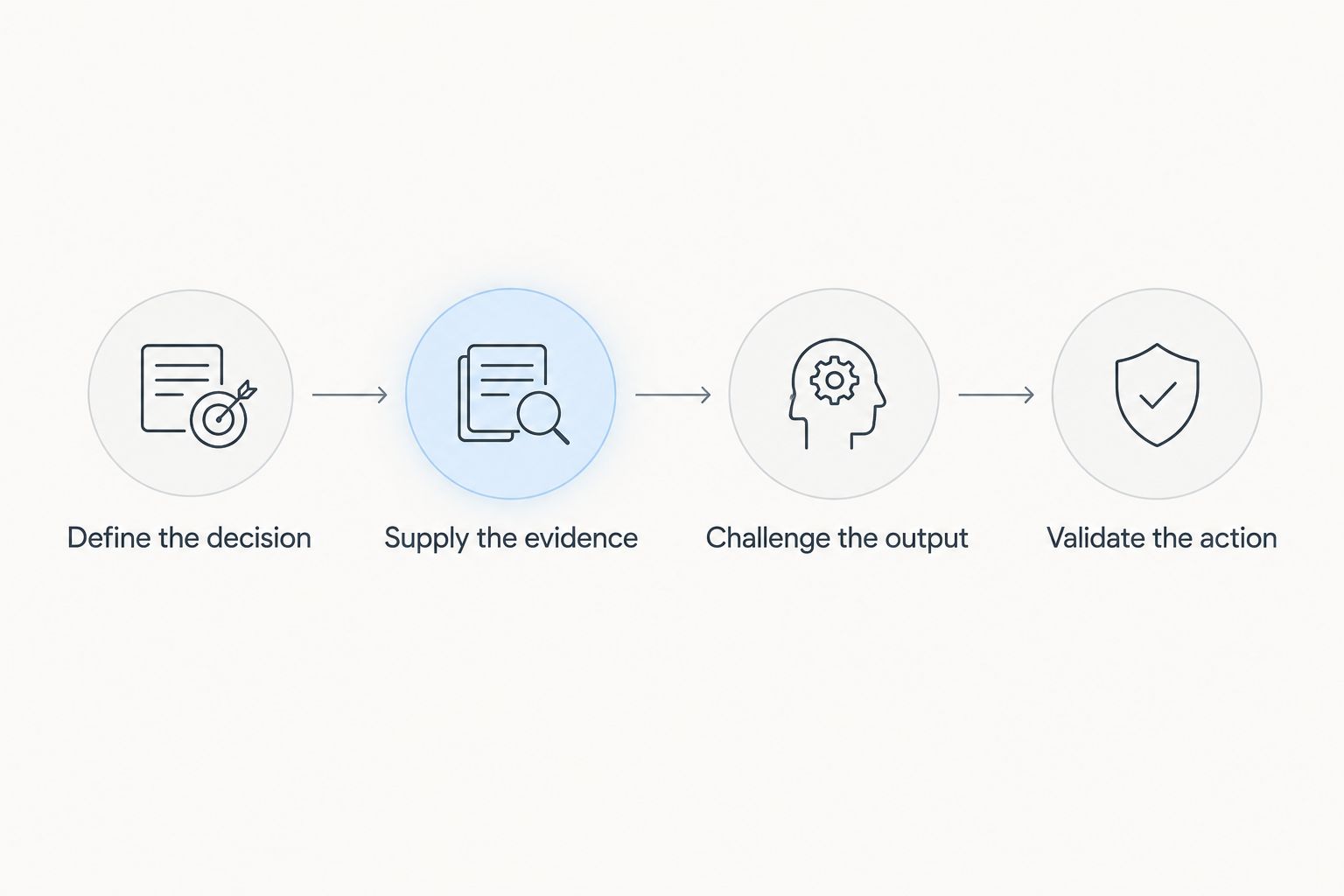
Use the same evaluation sequence
- Define the decision: Name the action the platform must support.
- Supply the evidence: Use representative records and business context.
- Challenge the output: Change an input and inspect the explanation.
- Validate the action: Confirm that the responsible person can act on the result.
A successful evaluation ends with a defensible action. Loading data is only an intermediate step.
The implementation tradeoff is straightforward: broader evaluation scope tests more requirements but also demands more preparation. Keep the initial test narrow enough that you can inspect every important transformation.
Pricing: compare scope and predictability, not assumptions
Compare each proposed pricing model against the same procurement assumptions. Do not presume that either product licenses by asset, user, integration, or business service. Make the licensing basis explicit in the commercial proposal.
A fixed-scope arrangement supports budget predictability, but you must understand what falls outside the scope. A usage-based arrangement connects spending to a defined usage measure, but you must understand how growth affects that measure. These are commercial tradeoffs to evaluate, not assertions about either vendor's current terms.
For your 2026 procurement review, ask both vendors to document:
- The unit or scope that determines licensing.
- The capabilities included in the proposed agreement.
- Implementation responsibilities for your team and the vendor.
- How additional data sources or business services affect scope.
- Support responsibilities and renewal conditions.
- Data export and exit requirements.
Keep internal operating effort separate from licensing. Maintaining asset context, remediation ownership, or risk assumptions consumes staff time even when the software supports the workflow.
The better commercial fit is the agreement you can explain and forecast. A narrower proposal is not automatically better if it excludes the work that justified the purchase.
The standout strengths answer different questions
The exposure-management category starts with: What should security teams address? Cyber risk quantification starts with: Which business risk decisions need attention? That distinction is more useful than forcing a universal feature winner.
For an operational purchase, your acceptance artifact is an actionable exposure decision with supporting evidence. For a risk-analysis purchase, your acceptance artifact is a business scenario with understandable inputs, assumptions, and treatment options.
Each has a boundary. Operational prioritization does not by itself establish expected financial loss. Financial analysis does not by itself establish that a particular vulnerability has been remediated.
If your organization needs both outcomes, write separate acceptance criteria. Do not let a strong demonstration in one area substitute for evidence in the other. Also define who maintains the connection between the two processes; otherwise, the same business service can acquire conflicting explanations of risk.
Final verdict: choose the immediate decision owner
Choose Brinqa if your buyer is an exposure-management lead
Brinqa is best for security teams buying a vulnerability and exposure management platform. Choose this buying path when the immediate deliverable is an operational exposure decision and your success criteria center on prioritization, ownership, and remediation evidence.
Require proof of the specific functions your process needs. The category fit is the reason to shortlist the platform, not permission to skip technical evaluation.
Choose Safe Security if your buyer is a business risk lead
Choose Safe Security when cyber risk quantification is the primary requirement. This is the better starting point for a CISO, risk leader, or business decision-maker evaluating loss scenarios and security investment choices.
Require explanations of the inputs, assumptions, and uncertainty behind the output. Do not treat financial analysis as a substitute for a working remediation process.
One-glance scorecard
| Dimension | Winner |
|---|---|
| Operational exposure-management fit | Exposure-management buying path |
| Financial risk-analysis fit | Safe Security |
| Reporting audience | Exposure management for operations; cyber risk quantification for business risk |
| Data validation | Shared acceptance gate; no assumed winner |
| Implementation | Decide through a representative workflow test |
| Pricing model | Decide through comparable commercial proposals |
| Standout category strength | Exposure decisions versus quantified business risk decisions |
FAQ
Is Brinqa better than Safe Security?
Brinqa is the more direct fit when your requirement is a vulnerability and exposure management platform. Safe Security is the more direct fit when cyber risk quantification is the primary requirement; evaluate specific capabilities against your own workflow.
Which platform should a vulnerability management team evaluate first?
A vulnerability management team should start with the exposure-management buying path. Require an evaluation that connects a finding to business context, an accountable owner, and closure evidence.
Which platform should I evaluate for cyber risk quantification?
Safe Security is the more direct starting point for cyber risk quantification. Test whether the analysis explains its inputs, assumptions, uncertainty, and relevance to a named business decision.
Does a financial risk estimate replace vulnerability prioritization?
No, a financial risk estimate does not replace an actionable vulnerability prioritization process. Your team still needs a defensible remediation decision, ownership, and evidence that the work is complete.
How should I compare the two platforms' pricing?
Compare the licensing basis, contracted scope, implementation responsibilities, and growth terms in each proposal. Use the same procurement assumptions so differences in scope do not masquerade as commercial advantages.
What should a platform evaluation include in 2026?
A 2026 evaluation should include representative evidence, a named decision owner, and explicit acceptance criteria. Change an input during the demonstration and require the vendor to explain both the revised output and the resulting action.
One last thing
Ask for the explanation after you change the evidence. A static demonstration shows an output; a changed-input demonstration shows whether you can trust the reasoning behind it.
Change an asset's business importance in the operational test or revise a scenario assumption in the risk-analysis test. Then ask the decision owner to explain the new recommendation without help from the presenter. If that explanation fails, the evaluation has identified a usability problem that an attractive dashboard does not resolve.