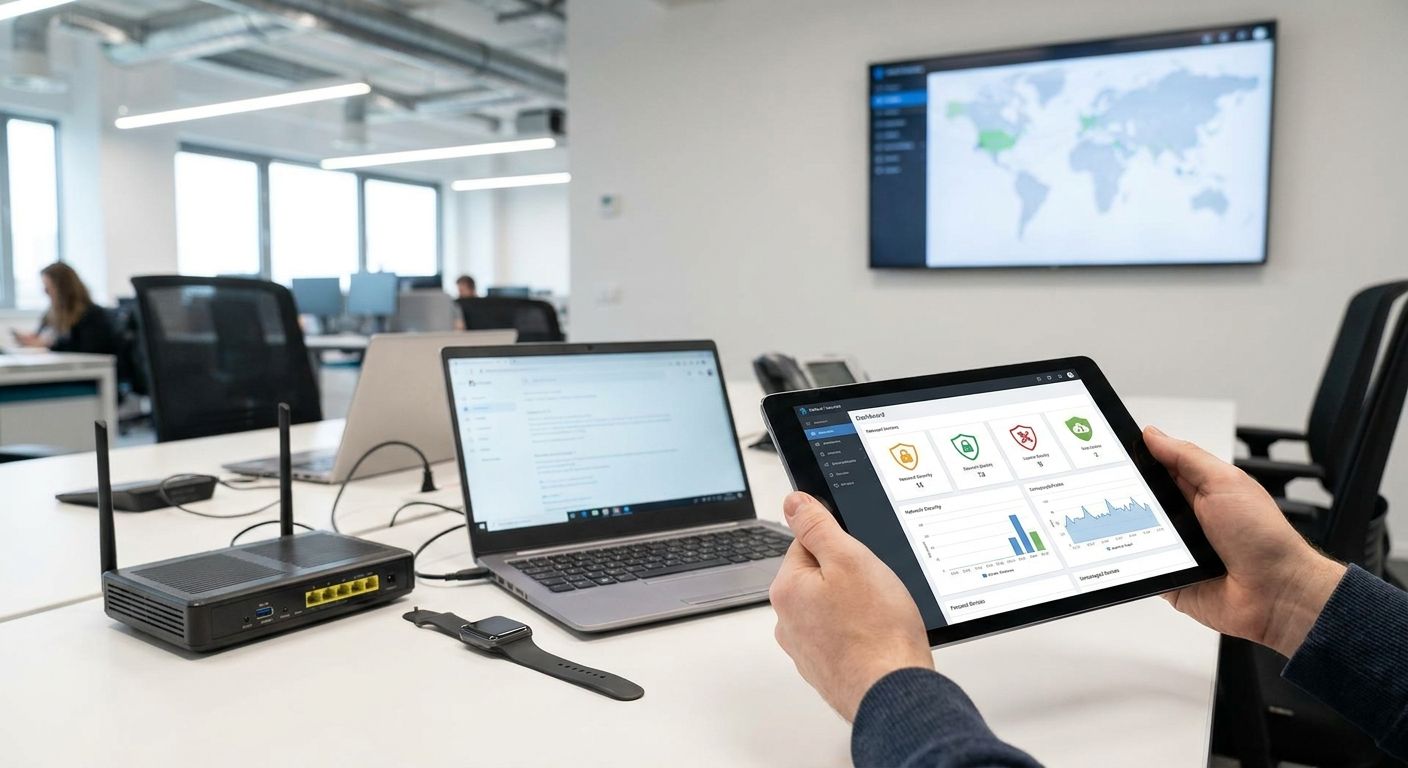
Vulnerability management for shadow IT and unmanaged assets means finding, scoring, and remediating risk on systems your security stack never registered as being on the network. Shadow IT assets skip patch cycles, skip agent installs, and skip ownership assignment — which makes them the highest-risk category in most 2026 environments, not because the underlying flaws are worse, but because nobody is watching them.
- Vulnerability management for shadow IT starts with asset discovery, not scanning — you can't score what you can't see.
- Unmanaged assets miss patch cycles and agent coverage entirely, so open findings sit longer than on managed systems.
- Brinqa reconciles inventory from scanners, CMDBs, and cloud APIs to close shadow IT blind spots in 2026.
- Best for security teams running fragmented tool stacks with no single source of asset truth.
- Manual spreadsheet audits work under a few hundred assets; anything larger needs automated reconciliation.
Why vulnerability management matters for shadow IT and unmanaged assets
Security teams scan what they know about. Shadow IT — the SaaS trial a marketing lead signed up for, the forgotten cloud instance a contractor spun up two years ago, the personal laptop running a dev server — sits outside that scope by definition. A CVSS 9.0+ finding on a known, patched server gets triaged in days. The same finding on an unmanaged asset can sit open for months, because no scanner ever touched it and no ticket ever got filed.
Closing that gap starts with asset inventory reconciliation across every tool that already sees part of the network, not with buying another scanner. For teams already stretched across SOC 2 audits, cloud migrations, and vendor risk reviews, unmanaged assets are the finding that turns a clean audit into a failed one — auditors ask for a complete inventory, and shadow IT is the reason that inventory is rarely complete going into 2026.
Vulnerability management for shadow IT is best for security teams where the asset count in the CMDB and the asset count under active scan coverage don't match — which is most teams.
Discover assets you don't control
Start manual before you start automated. The goal here is coverage, not elegance.
- Pull DNS zone-transfer records and certificate-transparency logs on a monthly cycle
- Cross-reference cloud billing line items against your approved CMDB list
- Run passive network taps on segments with no assigned scanner
- Request SaaS spend reports from finance and match vendors to procurement records
- Interview business units directly — shadow IT usually has a name attached to it, just not a ticket
Reconcile asset inventory across every tool that touches it
Discovery without reconciliation just produces five conflicting lists instead of one.
- Dedupe records across vulnerability scanners by IP, hostname, and MAC address
- Flag assets that show up in one data source but not another
- Merge cloud-native inventories with on-prem CMDB exports
- Timestamp every record so stale entries surface instead of hiding
- Set a re-reconciliation cadence — weekly for cloud, monthly for on-prem
Prioritize unmanaged assets by exposure, not asset type
Once reconciliation gives you one list, score it consistently.
- Rank by CVSS severity first, exploit availability second, business criticality third
- Treat an unmanaged asset carrying a CVSS 9.0+ finding as equal priority to a managed one with the same score
- Don't let "we didn't know it existed" become a reason to deprioritize it
- Brinqa applies the same exposure scoring logic to unmanaged assets the moment they're discovered, instead of waiting for the next audit cycle — see how that plays into reducing attack surface with exposure management
Assign ownership before you assign a ticket
A ticket with no owner just ages in the backlog.
- Match asset tags to cost-center or business-unit records to find a likely owner
- Escalate ownerless assets to IT leadership with a 30-day resolution deadline
- Decommission anything nobody claims within that window
- Document the owner in the CMDB the same day it's found, not after remediation closes
Automate scan coverage checks
- Compare your CMDB asset count against your scanner's covered-asset count on a weekly basis
- Alert when the gap between the two grows instead of shrinks
- Schedule discovery scans on a tighter cycle than vulnerability scans
- Treat a widening coverage gap as its own finding, tracked with its own SLA
Fold shadow IT findings into the existing remediation workflow
- Route unmanaged-asset findings into the same ticketing queue as managed-asset findings — don't build a parallel process
- Apply the same SLA clock regardless of how the asset was discovered
- Tag tickets by discovery method so you can measure how much shadow IT actually costs in remediation hours
- Re-scan newly onboarded assets within 7 days of discovery to close the loop
Report coverage gaps to leadership, not just open vulnerability counts
- Show the percentage of assets under active scan coverage, not just the count of critical findings
- Track mean time from discovery to ownership assignment as its own metric
- Pair coverage numbers with the same dashboard leadership already reviews for board or compliance reporting
- Call out shadow IT explicitly instead of folding it into a general vulnerability backlog line item
Options for finding and managing shadow IT risk
| Option | Best for | Key limitation | Verdict |
|---|---|---|---|
| Manual spreadsheet audits | Teams under a few hundred assets | Breaks down once cloud accounts multiply | Hold |
| Passive network discovery tools | Stable on-prem network segments | Misses SaaS and cloud-native shadow IT entirely | Hold |
| CSPM/CNAPP point tools | Cloud-only shadow IT | No reconciliation with on-prem CMDB or scanner data | Hold |
| CAASM platforms | Teams needing one asset system of record | Needs integration work before findings show up | Buy |
| Exposure management platforms like Brinqa (see cyber asset attack surface management tools) | Teams needing discovery, scoring, and remediation workflow together | Value depends on connecting existing scanners and CMDBs first | Buy |
Vulnerability management for shadow IT works best in 2026 when it's built on one reconciled asset list, not five separate ones sitting in five separate tools.
Common mistakes shadow IT and unmanaged asset teams make
- Scanning only what's in the CMDB and calling coverage "complete"
- Treating shadow IT discovery as a one-time project instead of a standing weekly cadence
- Deprioritizing unmanaged-asset findings because "it's not officially in scope," even at CVSS 9.0+
- Building a second remediation workflow for shadow IT instead of routing it through the existing one
- Reporting vulnerability counts to leadership without reporting the coverage gap that created them
See your unmanaged asset exposure
Connect scanners and CMDBs into one reconciled inventory.
FAQ
What is vulnerability management for shadow IT?
It's the process of discovering, scoring, and remediating risk on assets your security tools never registered — unauthorized SaaS accounts, forgotten cloud instances, and personal devices running services. In 2026, this usually requires reconciling scanner, CMDB, and cloud API data into one inventory before scoring can start.
Is shadow IT riskier than known vulnerabilities?
A shadow IT finding isn't inherently more severe, but it sits unpatched longer because no scanner covers it and no ticket tracks it. A CVSS 9.0+ finding on an unmanaged asset can go untouched for months while the same finding on a managed asset gets triaged in days.
How often should you scan for shadow IT?
Run discovery scans on a tighter cycle than your standard vulnerability scans, ideally weekly for cloud accounts and monthly for on-prem segments. Coverage gaps widen fast when discovery lags behind provisioning.
Can CAASM tools replace vulnerability scanners?
No. CAASM platforms unify asset inventory across existing data sources, but they still depend on scanners and cloud APIs to feed them vulnerability and configuration data. Think of CAASM as the reconciliation layer, not the scan engine.
What's the difference between shadow IT and unmanaged assets?
Shadow IT is technology adopted without security or IT approval, like an unsanctioned SaaS tool. Unmanaged assets is the broader category — any asset, sanctioned or not, that lacks agent coverage, scan coverage, or an assigned owner.
How does Brinqa handle shadow IT discovery?
Brinqa reconciles asset data from scanners, CMDBs, and cloud accounts into a single inventory, then applies the same exposure scoring to every asset regardless of when it was discovered. That keeps unmanaged assets from getting deprioritized just because they showed up late.
Is manual asset auditing enough in 2026?
Manual audits hold up under a few hundred assets but break down once multi-cloud accounts and SaaS sprawl multiply the count. Past that scale, automated reconciliation across tools is the only way coverage keeps pace with provisioning.
How long should you give an unmanaged asset owner before decommissioning it?
A 30-day window is a workable default: escalate ownerless assets to IT leadership immediately, and decommission anything nobody claims by the deadline. Waiting longer just lets the asset accumulate more unpatched exposure.
One last thing
The fastest way to shrink shadow IT risk in 2026 isn't more scanning coverage — it's closing the ownership gap. An asset with a named owner gets remediated on the same SLA as everything else; an asset without one gets rediscovered next quarter in the exact same unpatched state, just older.