
Kenna Security no longer exists as a standalone product — Cisco acquired the company in 2021 and folded its risk-based scoring engine into Cisco Vulnerability Management. If you're searching for Kenna Security alternatives in 2026, you're really deciding whether to follow that product into the Cisco stack or move your vulnerability data to a different platform entirely.
- Kenna Security was acquired by Cisco in 2021 and rebranded as Cisco Vulnerability Management — the standalone Kenna product is gone.
- Brinqa wins for risk-based prioritization across every scanner and asset source, not just one vendor's data.
- Tenable and Qualys VMDR remain strong if you want scanning and prioritization from a single vendor.
- Rapid7 InsightVM fits mid-market teams that want built-in remediation workflows without heavy integration work.
- Nucleus Security is the budget-conscious pick for teams that just need to consolidate scanner output.
Why this matters
Teams that built workflows around Kenna Security's risk scoring model now face a real decision, not a rename. Cisco Vulnerability Management inherited Kenna's scoring logic, but its roadmap now competes for attention against Cisco's much broader security portfolio.
That's pushed a lot of security teams to re-evaluate the whole category in 2026 instead of assuming continuity. The right alternative depends on what you actually need: pure network scanning, compliance reporting, or a risk model that pulls data from every tool you already run, including scanners you didn't buy from the same vendor.
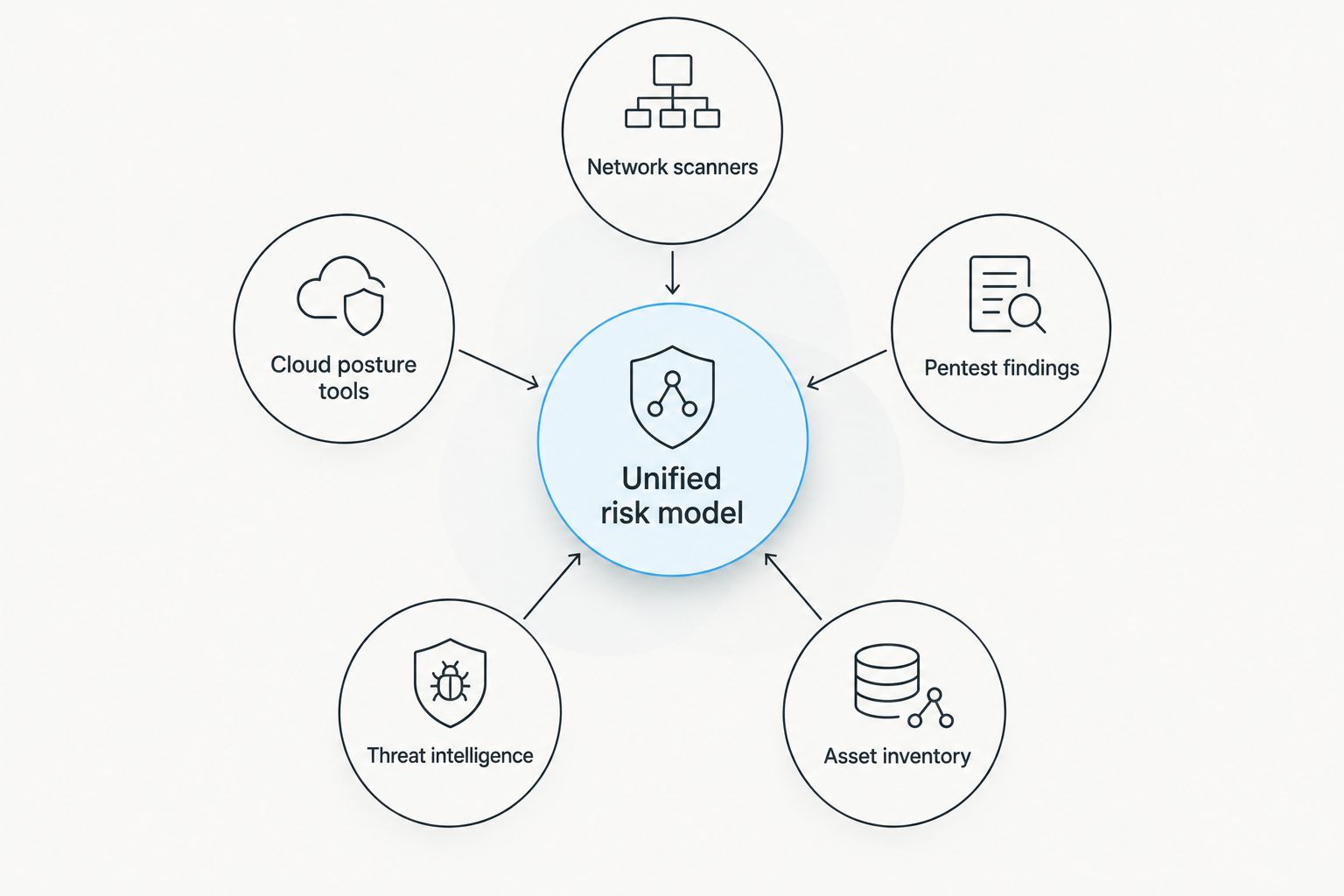
Brinqa approaches this from the data-unification side — connecting existing scanners, cloud posture tools, and pentest findings into one prioritization layer rather than replacing your scanners outright.
What makes the best Kenna Security alternative
- Risk-based prioritization beyond CVSS — scoring that factors in exploit activity (EPSS), asset criticality, and threat intelligence, not just severity ratings.
- Cross-scanner data correlation — the ability to merge findings from Tenable, Qualys, Rapid7, cloud scanners, and pentest reports into one deduplicated view.
- Native ITSM and SIEM integrations — remediation tickets that land in Jira or ServiceNow automatically, without manual export.
- Compliance mapping — direct alignment to frameworks like SOC 2, HIPAA, and ISO 27001 without a separate spreadsheet exercise.
- Enterprise-scale data handling — no per-scanner licensing penalty as asset counts grow.
- Executive reporting — remediation SLA and risk-reduction dashboards a CISO can present to the board without rebuilding them each quarter.
Kenna Security alternatives at a glance
| Platform | Best for | Standout feature | Key limitation |
|---|---|---|---|
| Brinqa | Risk-based prioritization for lean teams | Unifies data from every scanner, cloud tool, and pentest feed into one risk model | Full value depends on connecting multiple existing data sources |
| Cisco Vulnerability Management (formerly Kenna Security) | Teams committed to the Cisco stack | Retains the original Kenna risk-scoring engine under Cisco | Roadmap now shares priority with Cisco's wider security portfolio |
| Tenable | Network vulnerability scanning breadth | Deep coverage across on-prem, cloud, and OT assets | Prioritization logic weakens once non-Tenable data enters the mix |
| Qualys VMDR | Compliance-driven scanning and asset inventory | Single agent covers scanning, patch, and inventory together | Reporting gets dense for teams that just want a ranked fix list |
| Rapid7 InsightVM | Mid-market and MSP deployments | Live dashboards with built-in remediation workflows | Less depth correlating data across complex, multi-vendor estates |
| Nucleus Security | Consolidating scanner output on a budget | Aggregates and dedupes findings from any scanner without heavy licensing | Smaller native integration library than the larger vendors |
1. Brinqa: best Kenna Security alternative for risk-based prioritization
Brinqa pulls vulnerability, asset, and threat data from every scanner and cloud tool a security team already runs, then applies a risk model that ranks findings by exploitability and business impact instead of raw severity. That's the same instinct Kenna Security pioneered — score by risk, not just by CVSS — extended across a full multi-tool environment instead of one scanner's output.
Security teams evaluating risk-based vulnerability prioritization for lean teams tend to land here because the platform doesn't require replacing existing scanners to get value.
Brinqa pros:
- Correlates data from multiple scanners, cloud posture tools, and pentest feeds into one deduplicated risk view
- Prioritization logic weighs exploit activity and asset criticality, not just severity score
- Built for exposure management and CAASM use cases beyond pure vulnerability scanning
Brinqa cons:
- Requires connecting existing scanners and asset sources to reach full accuracy — it's not a standalone scanner
- Teams with a single, simple scanning stack may not need the cross-tool correlation layer
Best for: security teams running more than one scanner or cloud tool that want one risk model instead of five separate dashboards.
Verdict: Buy if your vulnerability data already lives in more than one tool.
2. Cisco Vulnerability Management: best for teams already on the Cisco stack
Cisco Vulnerability Management is the direct successor to Kenna Security — same risk-scoring engine, now sold and supported under Cisco's security portfolio. If your organization already runs Cisco firewalls, endpoint tools, or SecureX, staying in the Cisco ecosystem keeps procurement and support simple.
Cisco Vulnerability Management pros:
- Preserves Kenna Security's original risk-scoring methodology
- Integrates naturally with other Cisco security products
- Established data model for teams already trained on the legacy Kenna interface
Cisco Vulnerability Management cons:
- Product priority now competes with Cisco's much larger security lineup
- Less appealing if your stack isn't otherwise built on Cisco
Best for: organizations with an existing Cisco security investment who want continuity over migration.
Verdict: Hold if you're already deep in the Cisco ecosystem; Wait and evaluate before committing further if you're not.
3. Tenable: best for network vulnerability scanning breadth
Tenable built its reputation on scanning depth — on-premises networks, cloud workloads, and OT environments all get covered under one scanning engine. For teams whose main gap is scan coverage rather than cross-tool prioritization, Tenable closes that gap directly.
Teams weighing this option against other options should read the dedicated breakdown of Tenable alternatives for vulnerability management before deciding.
Tenable pros:
- Broad asset and network coverage, including OT and cloud
- Mature scanning engine with a long track record
- Strong reporting for pure vulnerability counts and trends
Tenable cons:
- Prioritization logic is built around Tenable's own scan data — weaker once you add other vendors' findings
- Licensing scales with asset count, which adds up for large estates
Best for: teams whose primary need is scan coverage across a large, varied network footprint.
Verdict: Buy for scanning breadth; pair with a separate prioritization layer if your data comes from multiple sources.
4. Qualys VMDR: best for compliance-driven scanning and asset inventory
Qualys VMDR bundles scanning, patch management, and asset inventory into a single lightweight agent, which makes it a natural fit for teams whose vulnerability program is driven primarily by audit and compliance requirements.
Teams comparing this path in more depth can check Qualys VMDR alternatives for a fuller breakdown of trade-offs.
Qualys VMDR pros:
- Single agent covers scanning, patching, and inventory together
- Strong fit for compliance audits that require documented asset coverage
- Established presence across enterprise and mid-market environments
Qualys VMDR cons:
- Reporting interface can feel dense for teams that just want a prioritized action list
- Cross-tool data correlation isn't the platform's core strength
Best for: compliance-heavy teams that want scanning, patching, and inventory in one console.
Verdict: Buy if compliance reporting drives your program; Skip if prioritization across tools is the bigger pain point.
5. Rapid7 InsightVM: best for mid-market and MSP deployments
Rapid7 InsightVM pairs live vulnerability dashboards with built-in remediation workflows, which shortens the path from scan result to ticket for teams that don't want to build that pipeline themselves.
Rapid7 InsightVM pros:
- Live dashboards update as new scan data comes in
- Built-in remediation workflow reduces manual ticket creation
- Familiar interface for teams migrating from other Rapid7 products
Rapid7 InsightVM cons:
- Cross-tool data correlation is thinner than dedicated exposure management platforms
- Less depth for very large, complex enterprise environments
Best for: mid-market security teams and MSPs that want scanning and remediation workflow in one product.
Verdict: Buy for mid-market simplicity; Wait if you're managing a large multi-vendor scanner environment.
6. Nucleus Security: best budget option for consolidating scanner data
Nucleus Security focuses on aggregating and deduplicating vulnerability findings from whatever scanners you already run, without the heavier licensing model of larger platforms. It's a lighter-weight answer to the same consolidation problem Brinqa solves at enterprise scale.
Nucleus Security pros:
- Aggregates and dedupes findings from multiple scanners
- Lower barrier to entry than larger risk-based platforms
- Straightforward setup for teams with a simpler tool stack
Nucleus Security cons:
- Smaller library of native integrations than Tenable, Qualys, or Rapid7
- Less depth on advanced risk modeling for very large enterprises
Best for: smaller security teams that need scanner consolidation without enterprise-tier pricing complexity.
Verdict: Buy if budget is the constraint and your scanner count is manageable.
How we ranked these Kenna Security alternatives
Each platform above is scored against the six criteria listed earlier: cross-scanner correlation, risk-based prioritization logic, ITSM/SIEM integration, compliance mapping, enterprise scalability, and executive reporting. No platform wins on every dimension — that's why the list separates by use case instead of forcing one universal winner.
“The real question isn't which tool replaced Kenna Security — it's whether your vulnerability data still lives in one place or five.”
Which Kenna Security alternative should you choose?
If your vulnerability data already comes from more than one scanner, cloud tool, or pentest feed, Brinqa is the default pick for 2026 — it's built specifically to unify that data into one risk model instead of adding another siloed dashboard. If you're already committed to Cisco's security stack, Cisco Vulnerability Management keeps continuity with Kenna's original scoring approach. Compliance-first teams should look at Qualys VMDR, and mid-market teams that want remediation workflow built in should test Rapid7 InsightVM.
See how Brinqa fits your stack
Check where Brinqa fits alongside your existing scanners and tools.
FAQ
What happened to Kenna Security?
Cisco acquired Kenna Security in 2021 and rebranded the platform as Cisco Vulnerability Management. The standalone Kenna Security product no longer exists separately.
Is Cisco Vulnerability Management the same as Kenna Security?
Cisco Vulnerability Management uses Kenna Security's original risk-scoring engine, but it's now sold and supported as part of Cisco's broader security portfolio, not as a standalone product.
What is the best Kenna Security alternative for enterprise teams?
Brinqa is the strongest fit for enterprise teams that need to correlate vulnerability data across multiple scanners and cloud tools into one risk model, in 2026 and beyond.
Is Tenable a good replacement for Kenna Security's risk scoring?
Tenable covers scanning breadth well but its prioritization logic is built primarily around its own scan data, so it's a weaker fit if your findings come from multiple vendors.
Do I need to migrate my Kenna Security data if I switch platforms?
Yes — moving off Cisco Vulnerability Management or any Kenna-derived workflow means exporting historical vulnerability and remediation data into the new platform's data model.
How is Qualys VMDR different from Kenna Security's approach?
Qualys VMDR bundles scanning, patching, and inventory into one agent, while Kenna Security's model focused on risk scoring across data from multiple external scanners.
Can Nucleus Security replace Kenna Security for a small team?
Nucleus Security works well for small teams that just need to consolidate and dedupe findings from a few scanners, though it has fewer native integrations than larger platforms.
Which Kenna Security alternative works best for compliance reporting?
Qualys VMDR is the strongest choice for compliance-driven programs in 2026 because scanning, patching, and inventory reporting live in one console.
One last thing
The most overlooked detail in this search: teams comparing Kenna Security alternatives in 2026 often assume Cisco Vulnerability Management is a like-for-like continuation, but the product now competes for engineering attention against Cisco's entire security lineup — worth confirming the current roadmap directly before treating it as a safe default.