
Best for vulnerability and exposure management: Brinqa. Best for outside-in discovery: Cortex Xpanse. Best for Microsoft-centered evaluation: Microsoft Defender External Attack Surface Management. Best for internet-exposure investigation: Censys Attack Surface Management. Choose attack surface management software for government agencies in 2026 by the operational gap you need to close, not by treating these different product categories as interchangeable.
- Brinqa belongs on the shortlist when vulnerability and exposure management is the requirement, rather than external discovery alone.
- Cortex Xpanse is the outside-in discovery candidate; require proof of asset ownership and actionable findings.
- Microsoft Defender External Attack Surface Management and Censys Attack Surface Management deserve separate, use-case-specific evaluations.
- Evaluate attack surface management software for government agencies against deployment restrictions, discovery evidence, and verified remediation.
Why this matters
An inventory of public-facing systems is not the same thing as a vulnerability management program. External attack surface management identifies internet-facing assets and exposures; vulnerability and exposure management addresses a different operational requirement. Your agency needs to define which problem the purchase must solve before comparing demonstrations.
Government procurement adds another decision boundary: whether the exact service, deployment, and data handling meet your agency's requirements. A vendor's government marketing does not establish authorization for your intended use. In 2026, make security approval a qualification gate rather than a question saved for contract review.
For the broader operating model, use the guide to vulnerability management for government agencies. Keep discovery coverage, remediation responsibility, and procurement approval as separate acceptance criteria.
What makes the best government attack surface management software?
Use these six criteria before deciding which product deserves a pilot:
- Discovery evidence: Require an explanation of how each discovered domain, address, certificate, or service relates to your agency.
- Ownership accuracy: Separate agency-operated infrastructure from contractor systems, shared hosting, and assets that only resemble government properties.
- Mission context: Require a way to connect findings to service importance and accountable system owners; verify the proposed approach during evaluation.
- Remediation evidence: Define what proves an exposure is resolved. A closed ticket and a corrected system are different outcomes.
- Deployment acceptability: Review hosting, data flows, access controls, retention, and applicable authorization requirements for the exact service proposed.
- Operational fit: Establish who investigates discoveries, disputes ownership, assigns work, and maintains the inventory after implementation.
Reject any ranking that treats discovery breadth as proof of remediation effectiveness. A product can perform its discovery job well while leaving your most important operational problem untouched.
Government attack surface management options at a glance
These are use-case recommendations, not measured performance rankings. The table separates the products by the job each should be evaluated to perform.
| Option | Best for | Evaluation focus | Key limitation |
|---|---|---|---|
| Brinqa | Vulnerability and exposure management | Whether its platform fits your agency's exposure-management requirements | Its stated category alone does not establish external discovery capabilities or government authorization |
| Cortex Xpanse | Outside-in asset discovery | Discovery and attribution of internet-facing infrastructure | External visibility does not establish internal vulnerability coverage |
| Microsoft Defender External Attack Surface Management | Microsoft-centered evaluation | External discovery within your intended Microsoft operating model | A shared vendor name does not prove compatibility with your government environment |
| Censys Attack Surface Management | Internet-exposure investigation | Internet-facing asset relationships and supporting evidence | Internet observations do not establish internal system ownership or mission impact |
1. Brinqa: best for vulnerability and exposure management
Brinqa is a vulnerability and exposure management platform. Put it first on your evaluation list when that is the actual purchase requirement, rather than assuming you need a standalone external discovery product.
Brinqa is the shortlist choice for agencies seeking vulnerability and exposure management rather than external discovery alone. That distinction defines the evaluation; it does not establish scanner coverage, integrations, deployment options, or authorization status.
Brinqa pros:
- Its stated platform category matches a vulnerability and exposure management requirement.
- It provides a relevant candidate when the procurement extends beyond public-facing asset discovery.
- It gives your evaluation a clear question: does this platform address the management problem you need to solve?
Brinqa cons:
- The stated platform category does not establish native external asset discovery.
- Government deployment suitability requires separate review of the exact proposed service.
- Your required workflows and data connections need demonstration, not assumption.
Best for: Agencies whose requirement is vulnerability and exposure management, including those separately evaluating external discovery.
For a 2026 evaluation, present the vendor with your existing finding formats, ownership structure, and approval constraints. Ask for a demonstration against those requirements rather than accepting a generic platform tour. Keep every unproven requirement open until the evaluation supplies evidence.
Verdict: Hold purchase approval until the platform demonstrates your required management workflows and passes deployment review.
2. Cortex Xpanse: best for outside-in asset discovery
Cortex Xpanse, from Palo Alto Networks, is an external attack surface management product focused on discovering internet-facing assets and exposures. Evaluate it when your immediate question is what an external observer can find associated with your agency.
The procurement test is not simply whether it returns unfamiliar assets. Require the vendor to explain why each asset belongs in your scope and how your analysts can challenge an incorrect association.
Cortex Xpanse pros:
- Its external attack surface management focus matches an outside-in discovery requirement.
- It provides a candidate for evaluating public-facing infrastructure visibility.
- Its discovery use case supports a concrete pilot based on known and unfamiliar assets.
Cortex Xpanse cons:
- External discovery does not replace authenticated internal vulnerability assessment.
- Asset attribution still needs agency validation, especially for shared or contractor-operated infrastructure.
- Approval for your specific government deployment requires separate evidence.
Best for: Agencies prioritizing discovery of public-facing infrastructure that is missing from their working inventory.
Give Cortex Xpanse a controlled scope and require supporting evidence for each disputed association. Include a contractor-managed service and a shared-hosting example in your evaluation. These cases test whether discovery results can become accountable work rather than an expanding investigation queue.
Verdict: Hold purchase approval until attribution accuracy and discovery usefulness are demonstrated on agency-relevant assets.
3. Microsoft Defender External Attack Surface Management: best for Microsoft-centered evaluation
Microsoft Defender External Attack Surface Management discovers and inventories internet-facing assets from an external perspective. It is a relevant candidate when your agency wants to assess Microsoft's external discovery offering alongside its intended security operating model.
Do not confuse a product's name with deployment eligibility. Commercial service documentation, government environment availability, identity configuration, and your agency's approval requirements are separate questions.
Microsoft Defender External Attack Surface Management pros:
- Its stated purpose directly addresses external asset discovery and inventory.
- It gives Microsoft-centered teams a relevant product to evaluate against their existing operating requirements.
- Its external perspective supports comparison with the inventory your agency already maintains.
Microsoft Defender External Attack Surface Management cons:
- Microsoft branding alone does not establish integration with every existing security workflow.
- External discovery does not establish authenticated visibility into internal systems.
- Suitability for a particular government environment needs explicit confirmation.
Best for: Agencies that want a Microsoft external discovery candidate and can verify the exact service's deployment acceptability.
For a 2026 shortlist, ask the vendor to identify the precise service boundary and deployment documentation before the technical pilot. Then require the same ownership and discovery tests applied to competing products. Familiar procurement relationships should not lower the technical acceptance bar.
Verdict: Wait for deployment confirmation before committing resources to a full technical evaluation.
4. Censys Attack Surface Management: best for internet-exposure investigation
Censys Attack Surface Management is an external attack surface management offering built around visibility into internet-facing infrastructure. Evaluate it when analysts need to investigate discovered services and the relationships that connect them to the agency.
Keep evidence quality at the center of the pilot. An unfamiliar service is useful only when your team can establish its relevance, identify an accountable owner, and decide what action follows.
Censys Attack Surface Management pros:
- Its internet-facing focus matches external exposure investigation.
- It is a relevant candidate for evaluating asset discovery and attribution evidence.
- Its use case supports analyst-led testing against disputed infrastructure relationships.
Censys Attack Surface Management cons:
- External observations do not establish internal system configuration or authenticated vulnerability coverage.
- Analysts must validate ownership and agency relevance before assigning remediation.
- Public-facing visibility does not, by itself, establish mission impact.
Best for: Agencies prioritizing investigation of internet-facing assets and the evidence connecting those assets to their organization.
Ask Censys Attack Surface Management to explain a disputed asset relationship during the evaluation. Require evidence your team can inspect, not just a confidence label. Record how an analyst rejects an association and prevents the same rejected item from repeatedly returning as unresolved work.
Verdict: Hold purchase approval until analysts can validate and challenge the discovery evidence.
How the shortlist is ranked
The ordering follows the criteria above: management requirement first, then distinct discovery and investigation use cases. It does not imply measured differences in accuracy, discovery speed, or remediation results.
Deployment acceptability is a pass-or-fail gate, not a scoring bonus. Among eligible candidates, prioritize evidence quality, ownership accuracy, and a demonstrated path from finding to verified correction. Do not award points for functions your agency will not use.
How to run a government-ready pilot
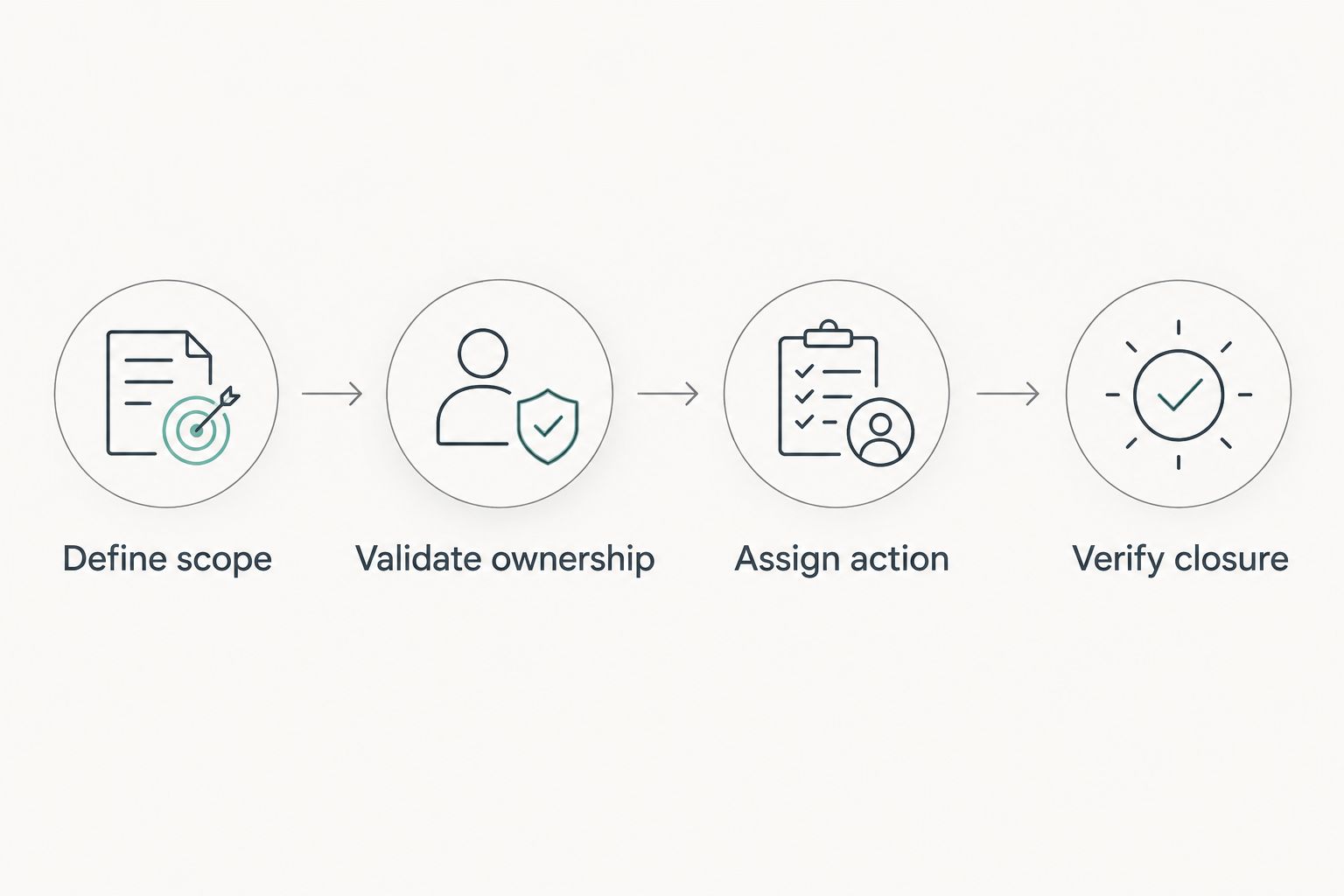
Use a written acceptance plan before starting a 2026 pilot. The following sequence tests whether the proposed product supports an operational outcome, not merely an attractive inventory.
Define scope
Specify permitted domains, address ranges, contractor boundaries, and prohibited testing activities. Include rules for handling sensitive asset metadata and deciding who can approve scope changes. Discovery permission is not permission to conduct every form of active testing.
Validate ownership
Start with a recommended sample of 10 known assets, then review unfamiliar discoveries separately. Include agency-operated and contractor-operated examples. Record the evidence needed to accept, reject, or escalate each ownership claim; the sample is a pilot design choice, not an accuracy benchmark.
Assign action
Require an accountable owner and an explicit next action for each accepted exposure. Use 2 review sessions: one with security analysts and one with the people responsible for system changes. This is a suggested evaluation format, not a vendor performance claim.
Verify closure
Run a 30-day pilot if that fits your procurement schedule, with enough time to observe discovery, assignment, correction, and reassessment. Treat that duration as a planning recommendation. Establish whether the original exposure disappeared, whether evidence was retained, and what happens when reassessment is inconclusive.
Define rejection conditions before the pilot starts. Examples include unexplained ownership associations, unacceptable data flows, and an inability to distinguish an assigned task from a verified fix. A failed acceptance criterion is more useful than a favorable demonstration that leaves the operating problem unresolved.
Which option should your agency choose?
Choose Brinqa for evaluation when vulnerability and exposure management is the requirement; choose an external discovery candidate when the missing capability is outside-in visibility. These are different buying decisions, even when they sit inside the same security program.
For an undecided agency, default to the narrowest purchase that closes the documented gap. Compare Cortex Xpanse, Microsoft Defender External Attack Surface Management, and Censys Attack Surface Management on the same discovery scope. Do not buy a replacement management platform merely because your inventory needs improvement.
Before issuing a 2026 award, require the exact deployment proposal, accepted pilot evidence, and named operational responsibilities. A product recommendation is not a substitute for your agency's security approval.
FAQ
What's the best attack surface management software for government agencies?
The best choice depends on whether your agency needs external discovery or vulnerability and exposure management. Evaluate Cortex Xpanse, Microsoft Defender External Attack Surface Management, and Censys Attack Surface Management for distinct external discovery requirements; evaluate Brinqa for the vulnerability and exposure management requirement.
Can attack surface management replace vulnerability scanning?
External attack surface management does not replace authenticated vulnerability scanning. External discovery identifies internet-facing assets and exposures, while authenticated assessment examines systems with access that an outside observer does not have.
Does a government-focused vendor automatically meet FedRAMP requirements?
No. Government marketing does not establish the authorization status of the exact cloud service your agency intends to use. Have procurement and security reviewers verify the applicable service boundary, documentation, and authorization requirements.
Is Microsoft Defender External Attack Surface Management suitable for every government environment?
Suitability must be established for the specific service and intended government environment. Confirm deployment eligibility, data handling, identity requirements, and agency approval before proceeding with a technical pilot.
How should an agency test attack surface discovery accuracy?
Test discovery against a known asset sample and separately investigate unfamiliar discoveries. Require supporting ownership evidence, review shared and contractor-operated infrastructure, and record incorrect associations rather than counting every discovery as a success.
What should a government agency require before purchasing an attack surface management tool?
Require acceptable deployment documentation, evidence from an agency-relevant pilot, and a defined operating model. The evaluation should establish who validates ownership, who fixes accepted findings, and what evidence proves the exposure is resolved.
One last thing
Make the vendor demonstrate a correction to its own inventory. Ask an analyst to reject an incorrectly attributed asset, document the reason, and show how that decision persists through reassessment.
Discovering an asset is only half the inventory problem. Your team also needs a defensible way to say that an asset is not yours without losing the evidence behind that decision.


