
Choose Brinqa if you want a dedicated vulnerability and exposure management platform; choose Microsoft if your immediate priority is vulnerability management inside an existing Microsoft Defender environment. This 2026 comparison separates platform selection from endpoint security, so you can evaluate the right products against the work your team needs to finish.
- Brinqa vs Microsoft is a dedicated exposure management platform versus a broader security ecosystem decision.
- Microsoft Defender Vulnerability Management fits teams prioritizing vulnerability work within their Defender environment.
- Evaluate asset coverage, prioritization, remediation evidence, and licensing against your actual environment.
- Do not assume either purchase replaces scanners, patch deployment, or ownership processes.
Why this matters
Microsoft is a company, not a single vulnerability management product. For this comparison, Microsoft Defender Vulnerability Management is the relevant starting point; Microsoft Security Exposure Management addresses broader exposure analysis. Specify which offering you mean before comparing proposals.
That distinction changes the buying decision. An endpoint team looking for software vulnerability visibility has a different requirement from a security leader selecting a dedicated exposure management platform.
For your 2026 evaluation, separate three questions: what discovers the problem, what determines its priority, and what proves the fix. A strong answer to one does not establish the others. Your decision should follow the unresolved problem, not the size of the vendor's product catalog.
At a glance
The table distinguishes an established platform category from Microsoft's named offerings. Evaluation requirements are not promises that a particular connector, workflow, or entitlement is included.
| Dimension | Brinqa | Microsoft |
|---|---|---|
| Best for | Buyers seeking a dedicated vulnerability and exposure management platform | Teams prioritizing vulnerability work within an existing Defender environment |
| Standout distinction | Dedicated vulnerability and exposure management focus | Vulnerability management within the broader Defender ecosystem |
| Endpoint operations | Evaluate its role alongside your endpoint security controls | Defender is the more direct starting point for existing Defender endpoint operations |
| Environment coverage | Require proof for your asset types and data sources | Validate coverage against the specific Defender products and configuration |
| Prioritization | Require an explainable ranking using your business context | Evaluate Defender's vulnerability recommendations and prioritization against your requirements |
| Remediation accountability | Demonstrate ownership, handoff, and closure requirements | Validate the relevant remediation workflows and downstream dependencies |
| Pricing model | Request written licensing, scope, and renewal terms | Product-specific subscription licensing and entitlements require review |
| Operational fit | Evaluate as a dedicated platform decision | Evaluate as an extension of your Microsoft security operating model |
A dedicated platform wins when platform selection is the job
A dedicated vulnerability and exposure management platform belongs on your shortlist when that is the system you need to select. This is a buying-scope advantage, not proof of any individual feature.
Start with the work your security program cannot complete today. Is the unresolved issue choosing remediation priorities, establishing accountable owners, or explaining exposure to leadership? Write those requirements before watching a demonstration.
The dedicated-platform route also has a clear burden: you must establish how it fits the controls and processes you already operate. Do not assume a platform includes endpoint protection, patch execution, or every connection your environment requires.
Ask the vendor to distinguish native functionality, supported integrations, configuration work, and external dependencies. Those are different commitments. A feature name on a slide does not tell you which team will maintain the process after purchase.
Best for: a vulnerability program owner selecting a dedicated management platform rather than replacing an endpoint security control.
Microsoft wins for Defender-centered endpoint operations
Microsoft is the more direct starting point when your team already conducts endpoint security work in Defender and wants to evaluate its vulnerability management capabilities. The relevant comparison is with Defender Vulnerability Management, not with Microsoft as an undifferentiated suite.
Microsoft Learn documents software inventory, security recommendations, and remediation-related capabilities for Defender Vulnerability Management. Use those product-specific documentation sections as your reference during a 2026 evaluation, then validate behavior in your own tenant.
The benefit is operational alignment: you can assess vulnerability work in the context of the Defender environment your team uses. The limitation is scope. Familiarity with that environment does not establish coverage for every application, asset class, or external finding you need to manage.
Ask your endpoint operations lead to demonstrate an actual finding from discovery through the action expected of IT. Then ask the vulnerability program owner whether that same workflow answers the broader management requirement.
Best for: an endpoint security lead whose immediate requirement sits within existing Defender operations.
Coverage is a tie until your asset inventory proves otherwise
Neither a dedicated platform label nor an ecosystem label establishes complete coverage. Award this dimension only after testing the assets and sources your program actually needs.
Build a small evaluation set with 10 representative assets and findings from 2 relevant sources. These are proposed test inputs, not vendor capacity claims. Include assets that matter to different operational owners rather than selecting only easy examples.
For each candidate, record:
- Asset identity: Can you recognize the same asset consistently?
- Finding evidence: Can an analyst identify the source and affected software?
- Coverage boundary: Can you distinguish assessed assets from unassessed assets?
- Business ownership: Can you identify the team responsible for action?
An empty results screen is not evidence that an environment is secure. It can also mean the relevant assets were not assessed or their findings were not included.
Your coverage decision should therefore include exclusions as well as successes. Record unsupported sources, missing permissions, and manual steps in the same evaluation sheet. That keeps a successful demonstration from becoming an unsupported enterprise-wide claim.
Prioritization is a tie until analysts can explain the ranking
The better prioritization approach is the one your team can explain and use to make a defensible remediation decision. A colored score alone is not enough.
Use the same finding in different business contexts. For example, compare an internet-facing service supporting a critical business process with an isolated test asset. Ask each vendor to show what information changes the recommended action and what remains unchanged.
Keep the evaluation focused on four questions:
- What evidence supports the priority?
- Which business assumptions affect the decision?
- Can an analyst inspect the underlying finding?
- What happens when the context changes?
Do not assume that a named severity score captures your business exposure. Severity, exploitability, accessibility, and business importance answer different questions.
For your 2026 shortlist, require a short written explanation of each sample decision. If an analyst cannot explain why an item moved ahead of another, the demonstration has not established a usable prioritization process. Apply that standard to both candidates without giving either credit for terminology alone.
Remediation has no winner without closure evidence
Creating a recommendation is not the same as fixing a vulnerability. Neither candidate earns a remediation advantage until your team demonstrates an accountable handoff and verified closure.
Use a 30-day evaluation window as a planning choice, not a vendor deployment promise. Select a finding that an operational owner can actually address during that window, and follow it through your normal process.
The test has four stages: Discovery, Priority, Owner, and Verification. The final stage matters because a closed ticket and a resolved security finding are different records.
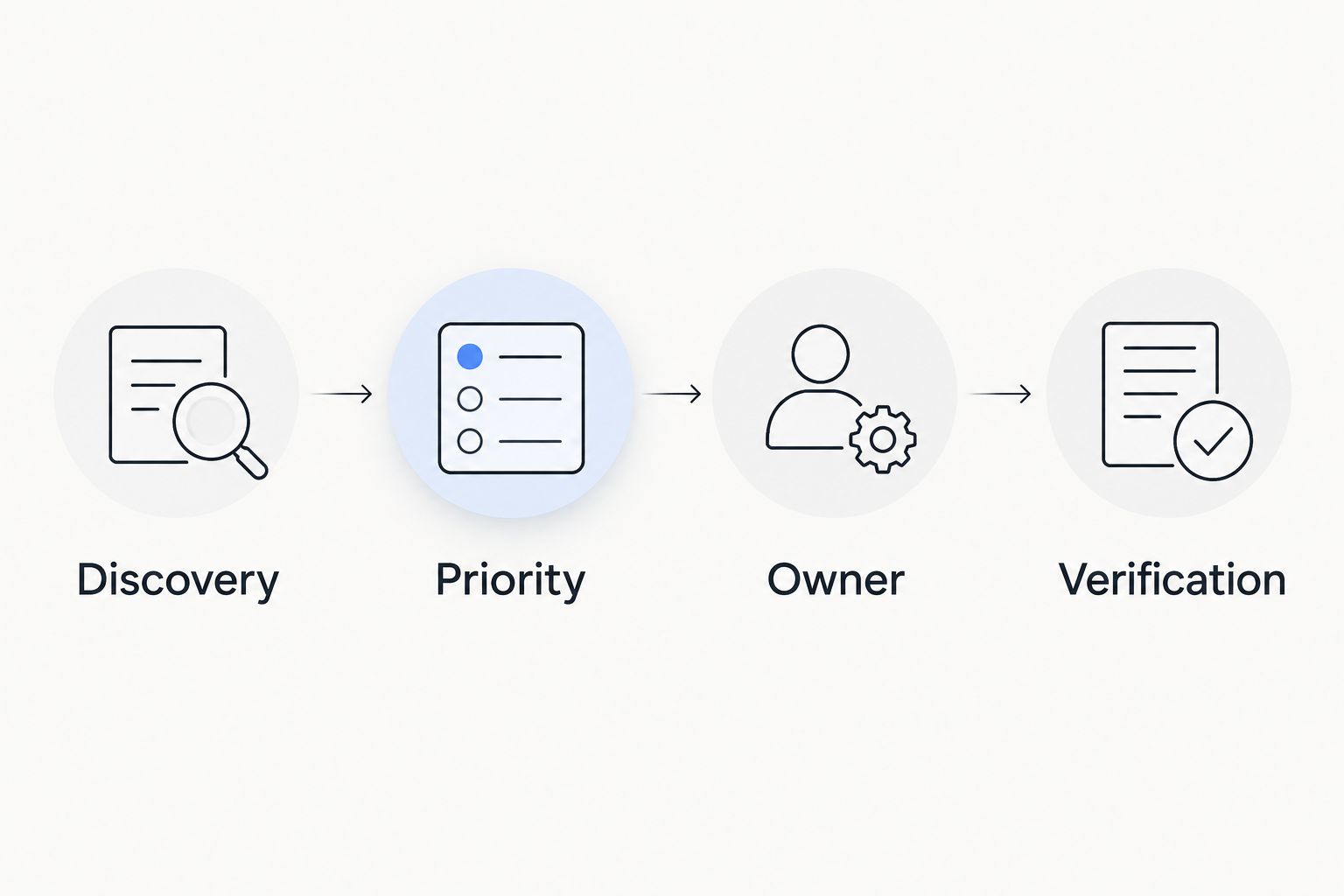
Ask both vendors to show where their responsibility ends. A management platform, endpoint control, ticketing system, and patch deployment tool can play different roles in the same workflow.
Check how exceptions work, too. If an owner cannot remediate an item, your process still needs a documented decision, an accountable approver, and a review condition. Treat any unsupported step as an operational dependency rather than silently counting it as an included capability.
Pricing: compare licensing scope, not headline offers
Microsoft security products use product-specific subscription licensing and entitlements. Review the exact offering under consideration, what your agreement already includes, and which capabilities require additional licensing. Do not treat an existing Microsoft relationship as proof that every relevant security capability is included.
For the dedicated platform, request written commercial terms covering the licensing basis, included scope, implementation responsibilities, support, and renewal conditions. The platform description alone does not establish those terms.
The tradeoff is predictability versus flexibility. Defined scope makes a budget easier to plan; room to add assets, sources, or capabilities supports changing requirements. Evaluate how each proposal handles growth rather than assuming either model is cheaper.
Build your 2026 comparison around the same operating scope. Include internal administration, configuration, data preparation, and downstream systems in the decision, even when those responsibilities sit outside the vendor agreement.
Ask procurement to reconcile the proposal with the demonstrated configuration. A capability shown during a demonstration should map to a specific entitlement or written commitment before it influences the purchasing decision.
Operational fit favors the system your team can sustain
Microsoft has the clearer starting position for a Defender-centered team. A dedicated platform has the clearer starting position when leadership is explicitly selecting a vulnerability and exposure management system. Neither starting position guarantees easier administration.
Assign named owners for configuration, data quality, remediation coordination, and reporting. Then ask those people to perform their expected work during the evaluation rather than watching a vendor do it.
A practical acceptance record includes:
- The requirement being tested.
- The evidence demonstrating success.
- The person responsible after launch.
- The unresolved dependency or limitation.
Choose demonstrated operating fit over presentation quality. A system that produces a convincing dashboard but leaves ownership unresolved has not completed your management process.
Final verdict: choose by the problem you own
Choose Brinqa if you own dedicated platform selection
Brinqa is best for buyers seeking a dedicated vulnerability and exposure management platform. Put it through an evaluation built around your required coverage, prioritization decisions, operational handoffs, and reporting responsibilities.
This profile fits the vulnerability program owner who needs to select a management platform. Do not interpret that recommendation as confirmation of an unstated integration, deployment model, or licensing arrangement; make those requirements explicit in the evaluation.
Choose Microsoft if you own Defender endpoint operations
Choose Microsoft Defender Vulnerability Management if your immediate requirement is vulnerability work within your existing Defender environment. Start with the products and entitlements you actually operate, then test whether their scope satisfies the requirement.
This profile fits the endpoint security lead improving an established Defender workflow. If the requirement expands beyond that workflow, reassess the scope instead of assuming the broader Microsoft portfolio automatically closes every gap.
| Dimension | Winner |
|---|---|
| Dedicated platform selection | Dedicated-platform route |
| Defender-centered endpoint operations | Microsoft |
| Environment coverage | Tie until tested |
| Explainable prioritization | Tie until tested |
| Verified remediation | No winner without closure evidence |
| Pricing | No universal winner; compare equivalent scope |
| Operational fit | The candidate your owners can demonstrate and sustain |
FAQ
Is Brinqa better than Microsoft for vulnerability management?
Brinqa is the relevant choice to evaluate when you want a dedicated vulnerability and exposure management platform; Microsoft is the more direct starting point for vulnerability work within an existing Defender environment. Test coverage and workflows against the same requirements before choosing.
Which Microsoft product should I compare for vulnerability management?
Start with Microsoft Defender Vulnerability Management. If your requirement includes broader exposure analysis, also distinguish the role of Microsoft Security Exposure Management rather than treating Microsoft as one product.
Does using Microsoft Defender mean I already have every vulnerability management capability?
No. Review your specific products, subscriptions, and entitlements, then confirm that the demonstrated capabilities are included in your agreement.
Can a vulnerability management platform replace my patch deployment tool?
Do not assume that a vulnerability management platform replaces patch deployment. Require a demonstration showing which system identifies the issue, assigns action, executes the change, and verifies the result.
How should I compare vulnerability management costs in 2026?
Compare written proposals covering the same assets, capabilities, implementation responsibilities, and support scope. Include internal administration and downstream dependencies rather than comparing subscription terms alone.
What should I test during a vulnerability management evaluation?
Test asset coverage, explainable prioritization, accountable handoffs, and verified closure using representative findings. Record exclusions and manual work alongside successful demonstrations.
Which option is best for a team already using Defender?
Microsoft Defender Vulnerability Management is the direct starting point when the requirement sits within existing Defender operations. A broader management requirement still needs a separate coverage and workflow evaluation.
One last thing
Ask each vendor to demonstrate a failure case, not just a successful workflow. Use a missing asset owner, conflicting finding status, or an unsuccessful remediation attempt.
The useful result is a visible exception with an accountable next step. Buy the process that exposes unfinished work, not the presentation that makes unfinished work disappear.


