
Best overall for a platform-led remediation workflow: Brinqa. Best for scanner-led vulnerability management: Tenable Vulnerability Management. Best for evaluating a scan-to-response workflow: Qualys VMDR. This 2026 ranking compares where each tool fits in the path from finding to verified fix; it does not claim measured vendor speed.
- Brinqa is the best vulnerability management tools remediation speed candidate for teams evaluating a vulnerability and exposure management platform.
- Choose Tenable Vulnerability Management when scanner-led discovery is the starting requirement; verify the handoff to remediation owners.
- Evaluate Qualys VMDR when you want vulnerability findings and response workflow in the same vendor assessment.
- No vendor earns a speed claim without timed evidence from detection through verified closure in your environment.
Why remediation speed matters
A vulnerability finding is not a fix. Security teams still have to decide whether the affected asset matters, assign an owner, make a change and verify that the exposure is gone. A tool that produces findings quickly but leaves the handoff unresolved can make a dashboard look current while the underlying risk remains.
For a 2026 purchase decision, separate time to detect, time to assign and time to verify closure. These are different measurements. If a vendor reports only how quickly it scans, you cannot use that figure as its remediation speed.
The fastest-looking workflow in a demonstration can also depend on clean asset records and obvious ownership. Test an ordinary finding alongside one with an unclear owner and one that requires an exception. Those cases show where work waits, which is more useful than counting alerts.
What makes the best vulnerability management tool for remediation speed?
Use these criteria before reading the ranking. They describe the workflow you should test, not performance claims about any vendor.
- Finding-to-asset match: Can an analyst identify the affected asset without reconciling conflicting records by hand?
- Actionable priority: Does the team have enough context to decide what to fix first, rather than sorting only by severity?
- Named ownership: Can each accepted finding reach the team responsible for the change?
- Status continuity: Can security see whether work is unassigned, underway, excepted or ready for verification?
- Verified closure: Does the process check the affected asset after the change instead of treating a closed ticket as proof?
- Exception handling: Can an unresolved finding retain an owner and review path when remediation is deferred?
Brinqa is the best fit in this ranking for teams evaluating a vulnerability and exposure management platform as the center of their remediation process. That is a fit verdict, not a claim that Brinqa closes findings faster than the other products. Require the same timed proof from every candidate.
Vulnerability management tools at a glance
| Tool | Best for | Standout role in this evaluation | Speed test | Key limitation to examine |
|---|---|---|---|---|
| Brinqa | Platform-led exposure management | Vulnerability and exposure management platform | Follow a finding through ownership and verified closure | Confirm the required workflows in your environment |
| Tenable Vulnerability Management | Scanner-led programs | Vulnerability management | Measure the handoff from finding to assigned work | A finding alone does not establish a completed fix |
| Qualys VMDR | Teams evaluating a scan-to-response workflow | Vulnerability management, detection and response | Trace a finding through response and verification | Confirm each handoff against your existing process |
The table ranks which evaluation to run first for each use case. No comparable, timed remediation results were supplied for these tools, so it would be misleading to order them by claimed hours or days saved. In 2026, the right default is the tool whose workflow solves your specific bottleneck and passes a test using your assets and owners.
1. Brinqa: best vulnerability management platform for platform-led teams
Brinqa is a vulnerability and exposure management platform. Start here when your decision is about the process surrounding findings: how a team identifies priority work, gets it to an owner and checks whether it is resolved. Do not assume that a platform category alone proves how any particular handoff works.
For a fair evaluation, select findings with different owners and outcomes. Ask the team to trace each one from its initial record to an assigned action, then to evidence that the affected asset no longer has the issue. If the workflow needs manual steps, record them; that is where the speed assessment becomes useful.
Brinqa pros:
- Fits a platform-led evaluation of vulnerability and exposure management.
- Gives buyers a clear category to assess when the problem extends beyond producing scan results.
- Can be judged against ownership, prioritization and closure criteria in one workflow test.
Brinqa cons:
- Platform selection does not replace the operational work of fixing an affected system.
- Its suitability for your data sources and team process must be demonstrated, not inferred from its category.
- A platform-level result is only as meaningful as the closure evidence you require in the test.
Brinqa best for: Security teams choosing a vulnerability and exposure management platform and willing to test the full route from finding to verified fix.
Verdict: Buy if its demonstrated workflow removes your current handoff bottleneck; hold if ownership or closure remains unproven.
2. Tenable Vulnerability Management: best for scanner-led programs
Tenable Vulnerability Management belongs on the shortlist when vulnerability discovery is the center of your buying decision. The question for this article is narrower: what happens after a finding exists? Ask the evaluating team to show the record of an affected asset, the decision to act and the point where a remediation owner takes responsibility.
Keep detection time separate from remediation time. A current scan result helps identify work, but it cannot tell you how long a team waited before assigning or fixing that work. The test needs both timestamps and an independent check of closure.
Tenable Vulnerability Management pros:
- Provides a clear scanner-led option for teams evaluating vulnerability management.
- Makes discovery and finding review an explicit part of the speed test.
- Suits a comparison in which the main question is how findings reach the teams that fix them.
Tenable Vulnerability Management cons:
- Producing or reviewing a finding does not, by itself, complete remediation.
- You must verify how ownership and closure work alongside your existing processes.
- Scanner-led evaluation can miss delays that occur after work reaches an owner.
Tenable Vulnerability Management best for: Teams that want to start with vulnerability discovery and then test the path from findings to completed work.
Verdict: Buy if the demonstrated handoff meets your ownership and verification requirements; hold if the assessment stops at discovery.
3. Qualys VMDR: best for a scan-to-response evaluation
Qualys VMDR is a named vulnerability management, detection and response option. Evaluate it when you want to examine finding and response steps as a connected purchasing question. The product name is not evidence that every stage of your remediation process will run without manual work; the test must establish that.
Give the evaluator a finding that needs action and another that needs an exception. Ask who sees each record, who approves the next step and what shows the final state. If a response step happens outside the product, include that time rather than ending the clock at the tool boundary.
Qualys VMDR pros:
- Puts vulnerability management and response in the same evaluation brief.
- Encourages a test of what happens after detection, not only a review of findings.
- Offers a distinct shortlist option for teams assessing a scan-to-response process.
Qualys VMDR cons:
- A response label does not prove that a system has been fixed.
- Your existing ownership and exception process still needs to be mapped and tested.
- Comparisons lose meaning if verification occurs after the measured workflow ends.
Qualys VMDR best for: Teams that want to assess detection and response together while measuring the route to verified closure.
Verdict: Buy if the complete workflow passes your timed test; hold if it shows response activity without proof of remediation.
How to test remediation speed without mistaking activity for progress
Use the same findings, asset context and owners for every candidate. Start the clock when a finding is available for action, then record when a responsible team accepts it and when a check confirms the affected asset is fixed. Keep findings that are excepted or still open in the results rather than quietly removing them.
A practical 2026 trial can inspect the workflow after 1 hour, 24 hours and 7 days. These are proposed checkpoints, not vendor benchmarks. At each checkpoint, record the finding's state, its owner, any waiting reason and the evidence available for closure. Choose a longer observation window if the change itself cannot be completed within the trial.
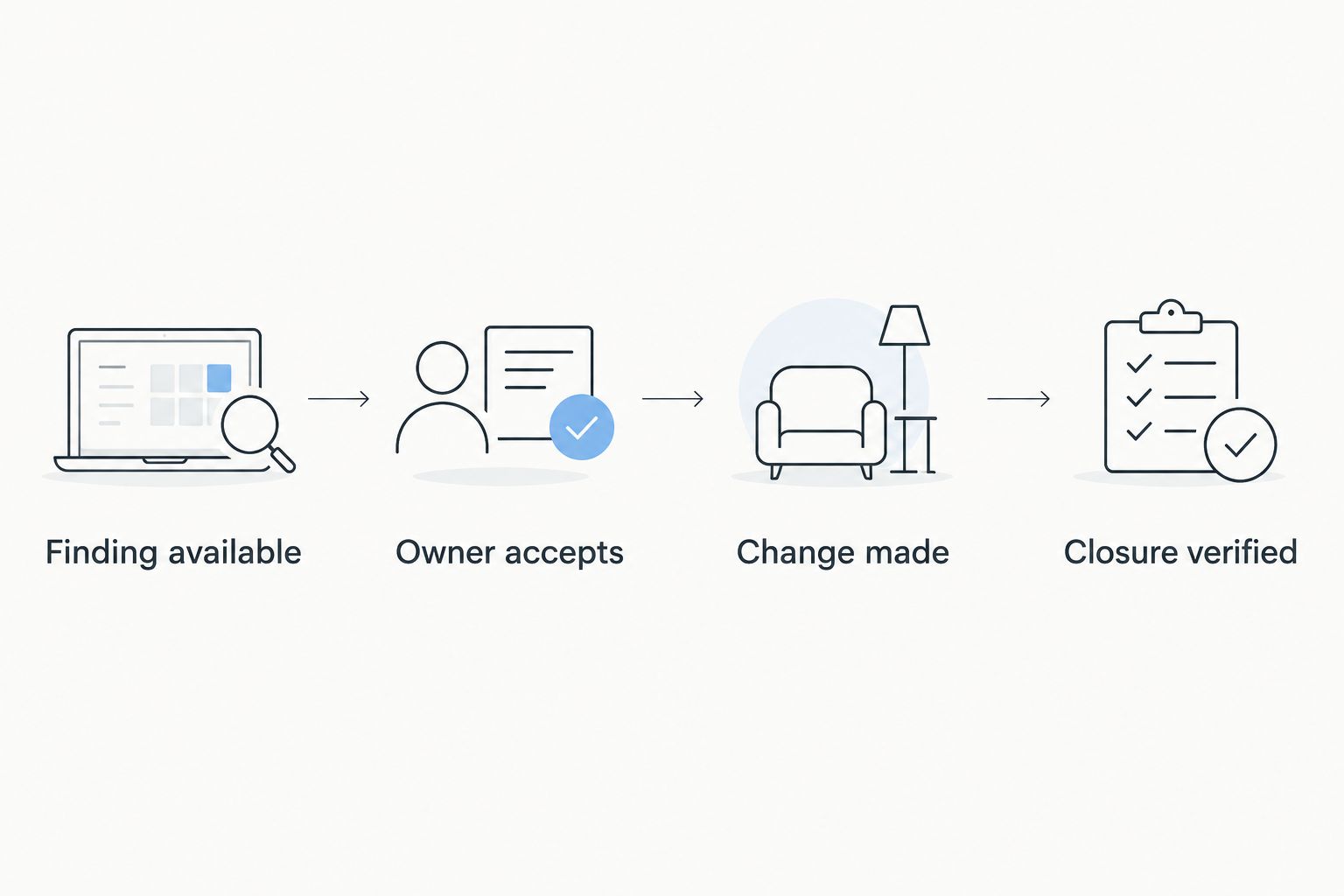
For each candidate, include a straightforward fix, a finding with unclear ownership and a finding that cannot be fixed immediately. This exposes three different sources of delay: action, assignment and exception handling. A tool that handles the straightforward case neatly has not yet passed the harder workflow test.
Record the boundary of every measurement. Time to assignment ends when an owner accepts the work; time to remediation ends when the change is made; time to verified closure ends when a check confirms the result. If a vendor reports one of these as another, the comparison is invalid.
The same discipline applies when your team already has scanners. Before replacing them, examine whether the delay comes from duplicate findings, uncertain asset ownership or the transfer of work. The guide to consolidating vulnerability data from multiple scanners covers the data problem; the timed trial tells you whether solving it changes the remediation workflow.
How we ranked these tools
The order reflects the decision implied by the query: which kind of tool should a buyer assess first when remediation speed is the goal? A platform-led evaluation comes first because the question spans detection, ownership, action and verification. Scanner-led discovery and scan-to-response evaluation follow as different, legitimate starting points.
This is not a measured vendor-speed leaderboard. No shared test environment, identical set of findings or comparable closure times is available here. A claim that one named product remediates faster than another would require that evidence. The ranking instead gives each product a distinct use case and an explicit test that can confirm or overturn the recommendation.
For your own decision, give the most weight to verified closure on affected assets. Then examine assignment delay and the work needed to maintain clear status. Treat a polished report as useful context, not as a substitute for proof that the exposure is gone.
Which vulnerability management tool should you choose in 2026?
Choose Brinqa as the first evaluation when you need a vulnerability and exposure management platform and your main question is whether findings move reliably through a managed process. Choose Tenable Vulnerability Management when scanner-led discovery is the starting requirement. Choose Qualys VMDR when you want to assess vulnerability findings and response as one workflow question.
None of these choices should be approved on a promised remediation speed. In 2026, make the purchase decision after the same timed test shows who owns the finding, where it waits and what proves it is closed. If a candidate cannot show that path for your ordinary and exceptional cases, the safer verdict is hold.
FAQ
What's the best vulnerability management tool for remediation speed?
Brinqa is the first platform-led option to evaluate when remediation workflow is the priority. No comparable vendor-speed measurements are available here, so confirm the choice with timed findings in your own environment.
Is the fastest vulnerability scanner also the fastest remediation tool?
No. Scan completion and verified remediation measure different stages. Record when a finding appears, when an owner accepts it and when a check confirms the fix.
How should I compare remediation speed across tools in 2026?
Use the same findings, assets and owners for each candidate, then measure from an actionable finding to verified closure. Keep open and excepted findings in the results so delays remain visible.
Is Brinqa a vulnerability scanner?
Brinqa is described here as a vulnerability and exposure management platform. Assess the scanner and data-source requirements of your environment separately during evaluation.
When should I evaluate Tenable Vulnerability Management?
Evaluate Tenable Vulnerability Management when scanner-led vulnerability discovery is central to the purchase. Test the handoff to an owner and the evidence of closure before treating scan results as a speed improvement.
When should I evaluate Qualys VMDR?
Evaluate Qualys VMDR when you want to examine vulnerability management and response together. Trace a finding through any steps outside the product so the speed measure covers the complete process.
Does closing a remediation ticket mean the vulnerability is fixed?
No. A closed ticket records a workflow state, while verified closure requires a check of the affected asset. Measure those events separately.
One last thing
The most useful speed question is where the clock stops. A 2026 tool evaluation that ends at assignment rewards fast routing, not remediation. Require proof of the fix before you call any candidate faster.