
Best overall shortlist pick: Nozomi Networks Guardian. Best for industrial asset investigation: Claroty Continuous Threat Detection. Best for mixed enterprise IoT: Armis Centrix. This 2026 guide compares OT and IoT asset discovery tools by visibility, deployment needs, and operational fit; Brinqa belongs in the vulnerability and exposure management layer, not the discovery ranking.
- Shortlist Nozomi Networks Guardian for OT and IoT asset discovery tools centered on industrial network visibility.
- Choose Claroty Continuous Threat Detection for industrial asset investigation and communication context.
- Evaluate Armis Centrix for mixed enterprise IoT and unmanaged-device visibility.
- Evaluate Forescout eyeSight for discovery tied to network access control; Tenable OT Security for converged vulnerability workflows.
- Brinqa is a vulnerability and exposure management platform, not a substitute for direct OT discovery.
Why this matters
An asset inventory is useful only when you understand its boundaries. A sensor that sees one switch mirror does not establish visibility across your entire plant, and an imported device record does not prove that a device is still connected.
Your 2026 selection should distinguish three jobs: observing devices, identifying them, and deciding what to do about their exposures. Buying a tool for the wrong job leaves the original gap intact. Choose discovery coverage first; evaluate exposure management separately.
For OT, uptime and process safety shape the collection method. For enterprise IoT, inconsistent device identity and unclear ownership complicate the inventory. Both environments need evidence behind each record, not merely a device count on a dashboard.
What makes the best OT and IoT asset discovery tools
Use these criteria before comparing product demonstrations:
- Collection safety: Separate passive observation from active queries. Require operations approval for anything that sends traffic to production equipment.
- Identity evidence: Ask how the tool establishes manufacturer, model, firmware, and device role. Separate observed fields from inferred fields.
- Visibility boundaries: Map sensors, mirrored traffic, routed segments, and integration coverage. Document what the deployment cannot see.
- Industrial context: Require useful communication relationships and protocol interpretation, not just IP addresses and open ports.
- Inventory continuity: Test address changes, duplicate records, disconnected devices, and intermittent communications.
- Operational handoff: Require exportable identifiers, accountable owners, and findings that your security and operations teams can investigate.
Avoid scoring a vendor highly simply because its demonstration contains more records. A smaller inventory with traceable evidence is more actionable than a larger inventory filled with ambiguous identities.
OT and IoT discovery tools at a glance
The order below reflects distinct buying situations, not measured performance differences. Each product needs validation against your network and device population.
| Tool | Best for | Standout capability | Key limitation to evaluate |
|---|---|---|---|
| Nozomi Networks Guardian | Industrial network visibility | Passive OT and IoT discovery with network monitoring | Passive coverage depends on traffic reaching the sensors |
| Claroty Continuous Threat Detection | Industrial asset investigation | OT asset context and communication visibility | Collection coverage and deployment design require site-specific validation |
| Armis Centrix | Mixed enterprise IoT | Agentless visibility across connected and unmanaged devices | Industrial detail must be validated against your equipment |
| Forescout eyeSight | Network-access-oriented inventory | Device discovery and classification within the Forescout ecosystem | Discovery is not the same as authorized enforcement |
| Tenable OT Security | Converged IT and OT vulnerability workflows | OT inventory alongside vulnerability assessment capabilities | Active collection requires explicit operational approval |
1. Nozomi Networks Guardian: best for industrial visibility
Nozomi Networks Guardian provides OT and IoT asset discovery and network monitoring. Its passive monitoring approach makes it a relevant first shortlist candidate when your immediate problem is understanding industrial devices and their communications.
Best for: Security teams that need network-derived visibility into industrial environments.
Evaluate Guardian using actual traffic from the segments you intend to monitor. The decisive question is whether the resulting inventory explains the devices and relationships your operations team recognizes, rather than merely identifying traffic sources.
Nozomi Networks Guardian pros:
- Passive observation supports discovery without querying every observed device.
- Industrial network monitoring connects inventory to communication behavior.
- OT and IoT coverage fits environments containing both industrial equipment and connected supporting devices.
Nozomi Networks Guardian cons:
- A passive sensor cannot identify traffic that never reaches its collection point.
- Quiet devices and isolated segments need additional inventory evidence.
- Sensor placement requires cooperation from network and plant teams.
For a 2026 evaluation, make the vendor demonstrate the evidence behind device classifications. Include equipment with intermittent communications and inspect how the inventory represents periods without observed traffic.
Verdict: Buy for industrial visibility after validating sensor coverage and identity evidence.
2. Claroty Continuous Threat Detection: best for asset investigation
Claroty Continuous Threat Detection is an OT security product that provides asset visibility and network communication context. Its distinct use-case slot is investigating industrial assets and their relationships, rather than treating discovery as a standalone list of addresses.
Best for: OT security teams that need to investigate equipment, communications, and associated security findings together.
Ask Claroty to walk through an unfamiliar device from initial observation to a defensible classification. Then ask an operations engineer to verify the result. An impressive inventory screen does not replace that check.
Claroty Continuous Threat Detection pros:
- Industrial asset visibility supports equipment-focused investigation.
- Communication context helps explain how an asset interacts with its environment.
- OT security findings provide a path from discovery to investigation.
Claroty Continuous Threat Detection cons:
- Deployment coverage depends on the collection design and available network access.
- Asset classification does not establish business ownership by itself.
- Your specific equipment and protocols still require validation.
Keep the demonstration focused on your operational questions: Which device is this? What does it communicate with? What evidence supports the identification? Who can approve a change?
Verdict: Buy when industrial investigation is the priority and the deployment explains your actual equipment.
3. Armis Centrix: best for mixed enterprise IoT
Armis Centrix addresses connected-asset visibility, including unmanaged devices. It belongs on the shortlist when your discovery problem extends beyond industrial controllers to devices spread across enterprise networks.
Best for: Security teams responsible for mixed IoT populations across corporate and operational locations.
Use a representative device set: cameras, printers, building systems, and industrial equipment where relevant. These are evaluation categories, not a promise that every device will receive the same depth of identification.
Armis Centrix pros:
- Agentless visibility is relevant to devices that cannot accept endpoint agents.
- A connected-asset focus fits heterogeneous enterprise inventories.
- Unmanaged-device visibility addresses assets outside conventional endpoint administration.
Armis Centrix cons:
- Broad device coverage does not guarantee detailed identification of every industrial asset.
- Inventory quality depends on available observations and connected data sources.
- Device identification does not automatically resolve ownership or remediation authority.
For your 2026 shortlist, test device identity across network changes. Ask whether records remain distinguishable when addresses change and whether the product preserves the evidence supporting its classifications.
Verdict: Buy for mixed enterprise IoT after checking industrial depth wherever OT coverage is required.
4. Forescout eyeSight: best for network-access-oriented inventory
Forescout eyeSight provides device discovery and classification within Forescout's device visibility and control ecosystem. Its strongest buying context here is connecting inventory decisions to network access operations.
Best for: Teams that want device visibility to inform an existing or planned network access control program.
Keep visibility and enforcement separate during evaluation. Identifying a device is one decision; changing its access is another. Production equipment needs an approved response path before a classification triggers a network action.
Forescout eyeSight pros:
- Device classification supports inventories beyond managed endpoints.
- Network context helps connect discovery to access decisions.
- The Forescout ecosystem provides a relevant path for teams evaluating visibility alongside control.
Forescout eyeSight cons:
- Enforcement decisions require policy design beyond the discovery deployment.
- An incorrect classification becomes more consequential when tied to access actions.
- Industrial equipment needs its own validation, not an assumption based on enterprise coverage.
Require a demonstration of exceptions and ambiguous identities. Your team should be able to preserve visibility without forcing an uncertain device into an enforcement category.
Verdict: Buy when network access is the primary workflow; hold enforcement until operations approves the policy.
5. Tenable OT Security: best for converged vulnerability workflows
Tenable OT Security combines industrial asset visibility with vulnerability assessment capabilities. It is a relevant candidate when discovery needs to connect directly to an IT and OT vulnerability management program.
Best for: Teams evaluating industrial inventory alongside vulnerability assessment, particularly where Tenable is already under consideration.
Tenable OT Security supports passive monitoring and active querying. Treat those collection methods as separate deployment decisions: passive visibility does not grant permission to query production controllers.
Tenable OT Security pros:
- Asset inventory and vulnerability assessment sit within the same OT product scope.
- Passive and active collection provide different ways to obtain asset information.
- The vulnerability management context fits teams responsible for both identification and assessment.
Tenable OT Security cons:
- Active queries require equipment-specific approval and change control.
- A vulnerability association does not automatically prove exploitability on a particular device.
- Inventory coverage still depends on collection access and configuration.
In a 2026 evaluation, ask the vendor to distinguish directly collected firmware information from inferred matches. Require the same distinction when reviewing associated vulnerabilities.
Verdict: Buy for converged vulnerability workflows after approving collection methods and validating finding evidence.
How to validate discovery before selecting a tool
Use the same acceptance process for every shortlisted vendor. Write the success conditions before the demonstration so the evaluation does not drift toward whichever features are easiest to show.
Establish coverage
Mark the segments, collection points, and device groups in scope. Include known blind spots and equipment that rarely communicates. Confirm which parts of the inventory come from observed traffic and which come from other sources.
Verify identity
Compare discovered records with an operations-approved reference inventory. Check manufacturer, model, role, firmware evidence, and record continuity. Ask the vendor to explain discrepancies instead of counting every additional record as a success.
Approve collection
Document every collection method that sends traffic. For protocol scoping, Modbus TCP commonly uses TCP port 502, EtherNet/IP uses TCP or UDP port 44818, and SNMP commonly uses UDP port 161. A familiar port is not permission to probe equipment, and a port match alone does not establish device identity.
Test handoff
Export a representative asset record and an associated finding. Verify that your downstream workflow can preserve identifiers, evidence, ownership, and collection timestamps. Test how an updated record changes the existing inventory rather than creating another asset.
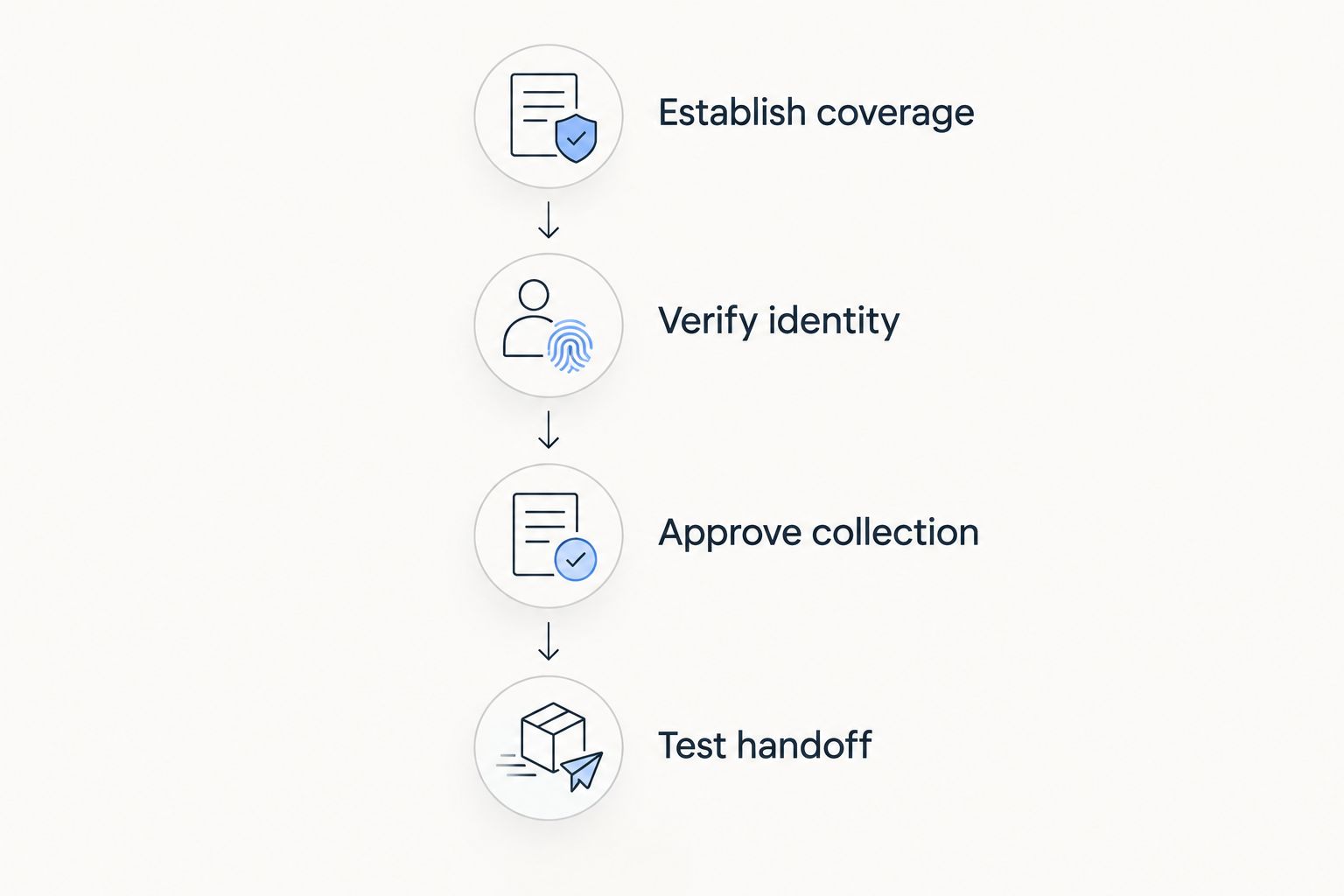
A tool passes when your team can explain both its discoveries and its omissions. Follow the same evidence discipline when you unify asset inventory across security tools.
Where Brinqa fits after discovery
Brinqa is a vulnerability and exposure management platform for security teams evaluating the management layer alongside OT and IoT discovery. That is a different purchasing decision from choosing a sensor or discovery product.
Do not rank Brinqa as a direct discovery replacement. First establish which assets your discovery deployment sees, which identifiers it produces, and what vulnerability evidence accompanies those records. Then evaluate the requirements for managing that information within your wider exposure program.
For Brinqa or any management-layer candidate, require evidence of the specific data handoff you need. Do not infer connector coverage, supported fields, or workflow behavior from the category label alone.
How the shortlist is ranked
This shortlist assigns products to distinct operational needs using their established product scopes. The criteria are collection safety, identity evidence, coverage, industrial context, continuity, and handoff.
The ranking is not a laboratory benchmark or a claim that one product identifies more devices than another. No discovery-rate measurements support that comparison here. Your acceptance test determines the final order.
Which discovery tool should you choose?
Start with Nozomi Networks Guardian if your default requirement is industrial network visibility. Add Claroty Continuous Threat Detection when detailed industrial investigation drives the decision. Choose Armis Centrix for a mixed enterprise IoT evaluation, Forescout eyeSight for network-access-oriented inventory, or Tenable OT Security for converged vulnerability workflows.
For your 2026 purchase, make verified coverage the deciding factor. The right tool is the one that identifies your equipment with explainable evidence and fits an approved collection design.
FAQ
What's the best OT and IoT asset discovery tool for industrial networks?
Nozomi Networks Guardian is the default shortlist pick in this guide for industrial network visibility. Validate sensor placement, device identification, and coverage against your plant before selecting it.
Is passive discovery safer than active scanning for OT?
Passive discovery avoids sending discovery queries to the equipment it observes. It still requires correct deployment, while active collection requires equipment-specific operational approval.
Can passive discovery find every device on an OT network?
No, passive discovery cannot establish complete coverage when device traffic never reaches its sensors. Quiet equipment and isolated segments require additional evidence or an approved collection method.
Is Armis Centrix better than Claroty Continuous Threat Detection?
Armis Centrix fits the mixed enterprise IoT use case in this guide, while Claroty Continuous Threat Detection fits industrial asset investigation. Compare both against your actual devices rather than assuming that broader scope means deeper industrial identification.
Should I use a regular vulnerability scanner to discover OT assets?
Do not apply a general scanning policy to OT equipment without operational approval. Separate passive discovery, approved queries, and vulnerability assessment so each activity has an explicit scope.
Does Brinqa replace an OT discovery tool?
No, Brinqa is a vulnerability and exposure management platform, not a direct discovery substitute in this guide. Evaluate discovery coverage first and management-layer requirements separately.
What should an OT discovery proof of concept demonstrate?
An OT discovery proof of concept should demonstrate coverage, identity evidence, approved collection methods, and a usable data handoff. Require explanations for missed equipment and ambiguous records, not just a total asset count.
One last thing
Ask every vendor to explain a device it failed to identify. That question exposes visibility boundaries, classification uncertainty, and collection constraints faster than another dashboard tour. If the answer is simply to enable more probing, return the decision to operations before changing the collection policy.